U.S. Breast Milk: Glyphosate-free

Earlier this year I googled pregnancy and pesticides.  Honestly I was curious to see if any other farming ladies had any advice on what and when to stay away from pesticides, what their thoughts were on driving a sprayer, mixing, using PPE (personal protective equipment) and any other ideas I hadn’t thought of.  In the end I came upon some really “out there” opinions.  One of them said that if you live near farming areas you should move, and went on to advise that you should also not live near anyone with a microwave…I quit reading at this point.  There is so much craziness out there about fear of pesticides and exposure it’s very overwhelming.  I ended up not looking any further on Google and enlisted the advice of people who I actually know and used the antique thing called a phone to call them.

After that experience I saw an article hitting my Facebook from Mom’s Across America.  They are a group that, from what I can tell, are out to stop the use of all chemicals in agriculture, and using plenty of fear to get their agenda across.  They had published a study done of a mere 10 women, concluding that yes, glyphosate (main ingredient used in Round-up)  was found in women’s breast milk.  As a mom who did nurse, I saw this article and to be honest, because of the source, took it with a grain of salt.  It was filed away in the back of my brain for a possible blog post in the future.

On July 27th, 2015, Michelle McGuire, a professor and researcher from Washington State University came out with a new study.  One that basically says Mom’s Across America got it wrong, that there was no glyphosate found in the breast milk of mothers in the US.  You can find the article here.  Now there is a lot of scientific talk when you read either conflicting articles, but I’m inclined to believe the findings from WSU for these main reasons.

  1. McGuire points out that the testing done for Moms Across America treated breast milk and water as the same substance.  From what I can read from the testing methods referred to on the Mom’s website, this is correct.  They describe the methods used for breast milk and water as being one in the same.  To me it makes perfect sense that there would and should be a difference in testing methods considering that the formulation itself of those two components are different.  They should then have separate testing methods, methods that were different when McGuire did the research.
  2. The study done first is in regards to only 10 women who were studied.  I couldn’t find out any information on these women or where their tests came from, the website only mentioned that they sent in their samples of urine and breast milk (chain of custody concerns).  I did like however that the study done by WSU used 41 women to study.  I would think that looking at more samples you would get a closer and more accurate picture of what is really going on.
  3. The women that were used in the study for WSU all live in an agricultural area (presumably the highest at risk for glyphosate to be found in them).  Also there was a good mix of those who had used glyphosate in farming, those who ate organic, those who lived on a farm, those who didn’t, etc.  Still there was no sign of glyphosate in their breast milk.

I’m glad that WSU and McGuire took the time to really look into this issue and come up with some more things to think about when it comes to whose study we believe in what has become a war almost of science vs. science.  Sometimes you have to take a step back and see what these studies are really saying, the subjects they use, the methods they use and draw your own opinions from there.  I’m sure that the battle back and forth of funding and who is friends with who along with the inevitable “Monsanto” overreach will be talked about in conjunction with these findings.  But as a walking example of a healthy person who has had plenty of exposure to glyphosate, because I’m a farmer and we use it on our farm for many different reasons, I can tell you that I feel plenty safe around all of these products, and I felt plenty safe nursing my baby too.
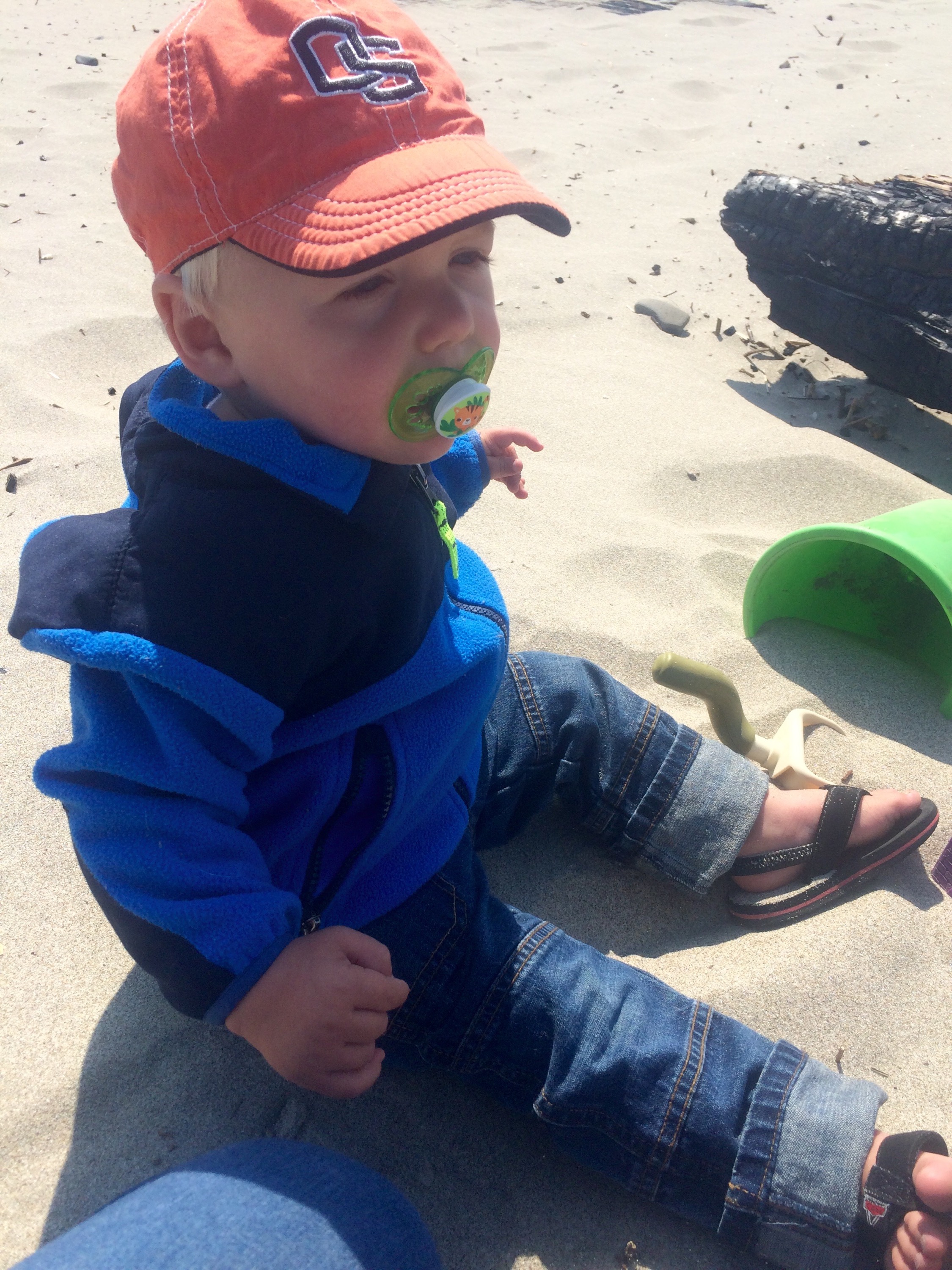
Photo Friday, Small Getaway

Farming is a way of life.  For many of us during certain times of the year that means everything revolves around the life of farming.  Everything from where you will be eating dinner, field or table, to what you can wear today, boots or flip flops.  It’s a seven day a week, 24 hour a day job that never quits.  Until you decide you’ve had enough and you just need a break.  Last week I told Matt it was time to get off the farm for a few hours and have an adventure, so we packed up the car and headed for the Pacific Ocean for the afternoon.


 It was great to getaway, to relax and just hang out.  Meanwhile you never really can getaway so the whole time driving there and back, while Hoot napped in the back, we talked about planting schedules, field rotations and plans for the coming year and our crops.  But at least we weren’t physically at the farm, we were covered in sand and happy as clams! 

Then come the next day it was back to work.  We are irrigating our youngest orchard of hazelnuts right now with their last set of water before they start to get ready for winter dormancy.  Ground is being worked to get ready for planting.  Soil tests are taken this time of year to make sure that our soil is happy and healthy moving into the next growing season.  Cleaning up equipment from seed harvest, getting equipment ready for hazelnut harvest & planting.  There is never a dull moment, but it was sure nice to getaway from it all (sort of) for a day.

Top 10 Ways You know it’s Harvest at our House

Harvest is a crazy time of year for farmers.  We work all year to grow a crop that is healthy and happy, and we have a very short window to get all that crop off of the fields.  Which means long hours, everyday of the week, no matter what.  So I got to thinking today, how if you were to walk into our house, how you would know it was harvest time.  So here are the top 10 ways you will know it’s harvest at our house…

1. You will notice the frozen lasagnas are slowly disappearing out of our freezer, by slowly I mean, we eat a lot of frozen meals during harvest.  It’s fast and easy, and can be thrown in the oven while you run out to check on harvesters or catch up on e-mails or calls.

2. You may see seeds on the ground in our laundry room.  During harvest I can always tell what crop we are combining by examining the lint trap.  Clover seed, grass seed, cabbage seed, are all on the ground in front of our dryer currently.

3. You will not find socks.  I don’t know where socks go during harvest, but they completely disappear.  You will however find socks on the list of things to buy on Amazon, lots of socks!

4. You will see laundry everywhere, sock-less laundry, but laundry just the same.  My best advice for finding jeans or another specific item during the midst of harvest laundry.  First, check the folded clothes basket.  Second, check the unfolded clothes basket.  Third, check the dryer.  And lastly if you still haven’t had any luck, grab your jeans from yesterday, they are going to be just as dirty in the first hour anyway.

5. You will not hear intelligent conversation.  Unless it has to deal with yields, moisture levels, planting plans, and field rotations.  It’s all we have room for in our tired brains.

6. Don’t be shocked to see us leave at all times of the night and early morning.  Like I said we work all hours, all days…did I mention we are tired?

7. You will see farmers tans. It’s not just a saying, these white legs and tan arms of mine resemble a ying yang symbol most of summer.

8. You will see Hoot napping in our pick-up while we move combines down the road.  Yes, if we can, we synchronize nap times with long road moves from field to field.

9. You will see Hoot with us a lot. He’s been quite the trooper, combine riding, checking fields, starting irrigation, this farm boy has had no lack of field time!

2
10. Mostly though I hope you will see a hard working family. A family that everyday works together to make it through, tired, haggard, and impatient at times…but together.

The crazy part is that after all is said and done this year, the weather will cool down and leaves will start to turn, we will look back and contemplate all the decisions made for the year, and I know without a doubt we will look forward to harvest next year.  It will hit the very next spring, forgetting the messy house and laundry, frozen meals and exhaustion and get excited for that time of the year when when all your hard work and hopefully mother nature have worked together well enough to get a good crop out of the soil. Because, in the end, this is the life we love, this is the life we have chosen and that’s farming.