This time of year (mostly on social media) I hear so many complaints about the dust.
- Why do they have to create so much dust?
- I can’t breathe, why the dust?
- Why do they have to work the ground to death?
- Why don’t they cover crop?
- What about no-till farming?
- Why, Why, Why??!!
Then this great (and timely) piece written by Tiffany Harper Monroe came out in the Eugene Register Guard entitled “From Dust till Dawn”.
“As more people move into rural areas, it’s important for everyone to remember that farms and ranches are not just bucolic backgrounds. They are hard-working operations raising food and foliage, and sometimes that means there will be the associated dust, noise, smells and slow-moving farm equipment on the roads.”
I get it, I work in the dust and dirt and there are days where my teeth are gritty with it and my clothes are saturated. So I want you to know that I’m not arguing that the dust isn’t annoying, but I am asking for a look at the bigger picture and hear another perspective.
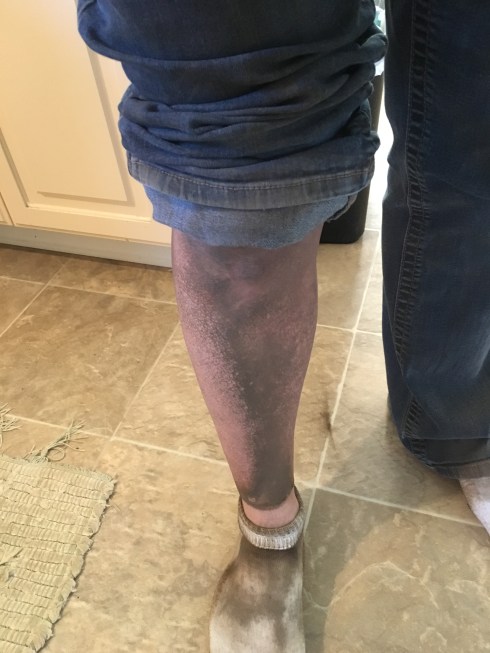 This was after a particularly dust filled day transplanting cabbage.
It seems so simple from the outside looking in, straightforward answers and solutions, but when I try to sit down today and write down why we do all that we do and why it happens to create dust, it’s overwhelming. Because the answers aren’t simple and straightforward, it’s a complicated web that reaches from our farm and across the world.
To make one thing very clear, my answer is not, “Well that’s how we have always done it.” Also my answer is not, “I don’t know.”
FIELD & SOIL ROTATION
On our farm, one reason we till the soil (which often creates dust) is simply because of the crops that we grow. We raise seed crops and vegetables on the soil that we till. To do this our soils need to be rotated. Rotating, which is done often by tillage helps in many ways.
- Reduces our pest populations (mice and slugs)
- Gives us a chance to kill unwanted weeds and plants without pesticides
- Bring last years volunteer seeds to the surface so you can get a sprout and have a naturally occurring cover crop through the winter
- Reduces disease pressure in the soil profile
- Allows for more organic material to be put back into the soil
- Gives certain parts of the soil a break while different crops are being cultivated
SEED GERMINATION & EROSION CONTROL
Working the soil is important because as we work it down into a seed bed, the seeds that we plant this fall will grow better and grow larger plants before the rains start this winter; helping with erosion. If you were to plant into subpar conditions, it’s really hard for the seeds to get up and growing. It also can leave areas where the seeds don’t germinate at all, leaving space open for weeds to come in.
WEED CONTROL
Why do we care so much about weeds? Well in any cover cropping, no till, earth saving book you read, at the end of the day, one of the most important factors is your ability to get clean seed to plant. We provide that seed, and walking through a field to pull unwanted grass species isn’t fun. and isn’t cost effective. So the better the seed bed of soil when you start, the better seed we can offer for whoever plants it – one with minimal weeds.
BEYOND JUST OUR FARM & OUR SOIL
As you can see my answers go beyond our farm and just our soil, the crops that we are growing in many cases are heading out as “clean seed lots” to be planted in no-till fields across the US. They are heading out to re-seed pastures and be used as cover crops to protect topsoil. When these crops grow on our land they are sequestering carbon. The environmental benefits to what we are doing are huge, the dust, while unfortunate, is part of that picture too. The whole ecosystem of agriculture that starts on farms across the US, is bigger and more complicated than one tractor in a field creating small particulates that frustrate some folks driving through the beautiful countryside. It’s not about how we’ve always done things, it’s about how we are moving forward to continually find ways to make our soils healthier while continuing to produce some of the highest quality seed and food for folks across the map.
I encourage you to read Harper Monroe’s opinion article, it carefully spells out some of the other reasons that we do what we do on our farms. It includes some great points regarding field burning and additional environmental benefits that farmland here in Oregon provides.
It seems so simple this “dust in the air” issue. But I am asking you to open up your mind beyond “the fuss about the dust” and see that there is a complex system at work here. I agree with Harper Monroe, “The more we keep encouraging communication and building relationships between urban and rural residents, the more we will see that Lane County (and Oregon as a whole) is a place for all of us.”
Like what you read? Share it here...




 NuttyGrass