The start, the middle, or the end of harvest?

Harvest has been happening for awhile around here. It snuck right up on us after a long winter and the idea of you were following plant stage and growing degree days that we would start harvest late. I stupidly started making early July plans that seems so attainable with a mid July start. However I quickly started canceling things when we looked out the window one day and Matt said, “maybe we should look at the clover, it looks really brown!” And after a quick look at the field later that day, “Hey it’s Brenda, so that camping trip I said maybe we could do…..how does your November look for timing?”

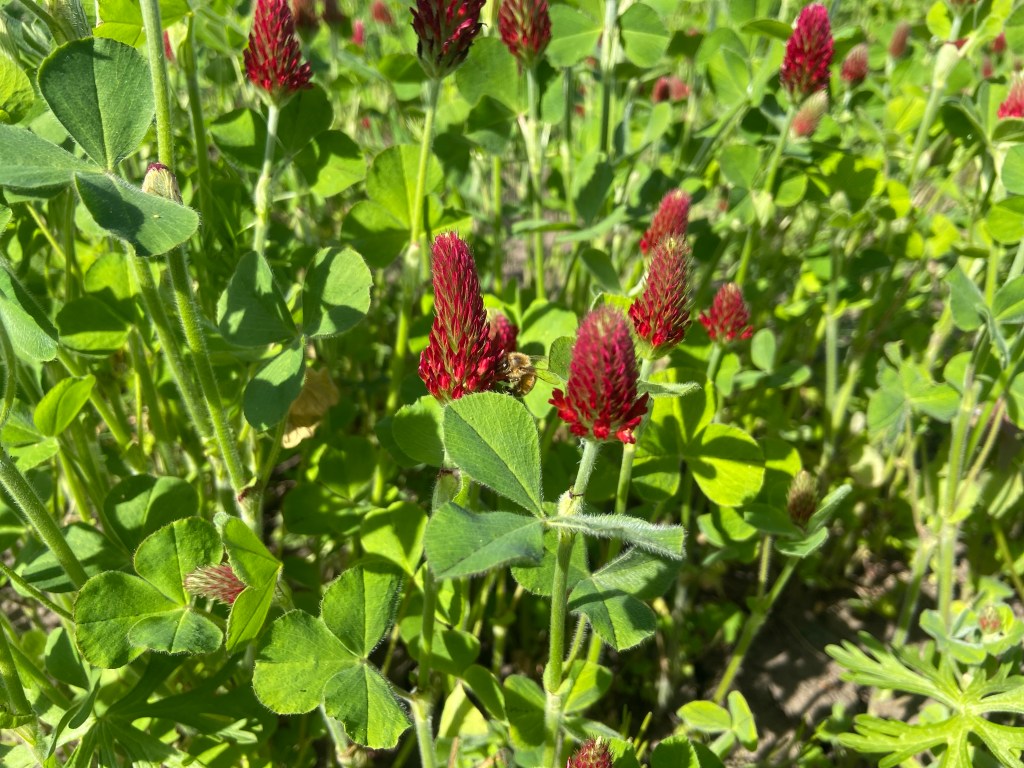
We have finished up clover harvest. And my gosh what a surprise, after so much drama with that darn stuff it actually produced a very nice sized seed crop.

Grass seed harvest started near the end of June with swathing or cutting the grass.

Combining or separating the seed from the straw started quickly after our good old St. Paul rodeo on the 6th of July. We have about 4 or 5 more days until we finish up that crop.

Hoot also found out that he’s heavy enough to weigh down the seat of the John Deere by himself and got some good driving time in.

Our green beans are just about ready to be harvested, probably next week sometime.

And finally the filbert crop is looking great. The price not so much, but that’s probably a whole other blog post that we don’t have time for today.

So all in all we are at the just the start with some crops, right in the middle of others and at the very end of a long harvest season. Meanwhile we are of course taking soil samples, mowing old crop stubble and starting to work ground for fall planting.

Hoot is also our field chauffeur after learning to drive the four wheeler.

Life in the fields has become the norm around here for the past month and a half. Some of us are ready for a little less dust in our dinner, but I also know we will look forward to it all again next year.

We can just get it done later – Crimson Clover’s Story of 2023

This is one thing that I have to continually explain to folks. Farmers rarely have the opportunity when it comes to crop care to say, “we can just get it done later.” In a year like this when the weather isn’t cooperating to allow us to get out and care for our crops, windows are opening and closing every day.

Our crimson clover has a few of these issues going on this year. Weed control and size of the plant.

Unfortunately with our inability to access and get on the field with our sprayer (we don’t like getting stuck in the mud), we were unable to spray our usual weed control on the clover. So as the clover wakes up after being dormant so have the weeds. The window has closed to spray our normal weed control for broadleaves and we are now having to wait longer for the crop to get bigger before we apply our plan b for weed control. This isn’t ideal because the plan b herbicides aren’t as good as the ones we originally planned to use. They are also more expensive and while we wait the weeds are growing which means they will be harder to kill and control.

The clover is also really small for this time of year. It’s a crop that is usually gets planted and established in the fall and then by spring it shoots to life. Once we hit a certain amount of daylight the crop goes into reproductive mode shooting beautiful blooms up. These blooms mature after bee pollination and produce the seeds that we harvest.

We really don’t want those beautiful flowers to bloom while the stem is only a few inches high because that would mean basically little to no seed to harvest with it not having the root and stem structure to handle feeding the crop until harvest and maturity.

Crimson is a crop that actually puts nitrogen back into the soil so it’s a tough (and expensive) pill to swallow to put out more outputs (aka fertilizer) for a crop that you hadn’t planned on. But you don’t always have the perfect choice of what to do and a plan that can be followed 100% of the time. With a little fertilizer we are hoping to keep the plant growing and not blooming just a little longer to grow a better crop.

I wrote the beginning of this post quite awhile ago; today we are at a much different place in the crop cycle. The good news is that the crimson did grow taller and more lush with the fertilizer application. The bad news is that so did the weeds and we weren’t able to even use plan B for weed control. The plants are done blooming now, the bees have done all they can pollenating. and now we are just a few days from cutting it, letting it mature to the fullest in the windrow and combine it. Until it’s in the truck we won’t know what the decisions we made or were forced to make did or didn’t do for our yield.

That’s about the best way to sum up farming. Do all you can with what you’ve been given, and then pray the decisions made were the right ones to produce a good crop for the year. Then rinse and repeat year after year, always projecting as best you can, always pivoting when needed and Lord knows, always praying.

Two of the busiest days in farming

Farming is very centered around things that are out of our control; and I put weather very close if not at the top of that list. So it probably doesn’t surprise you that what makes a farming day busy is a direct correlation. Day 1: when it starts to rain. Day 2: when it finally dries out.

Day 1 is usually in the fall. We are waiting for rain to help water in chemical to keep our fields clean, we are planting in hopes for some good rains to give it a good start. We are working fields to get some moisture to help break up the clouds that don’t allow for a good seed bed. The day before it starts to rain in the fall is usually never long enough to get it all completely done; but that doesn’t mean you don’t work your tail off trying.

Day 2 hits in the late winter – early spring. the day that fields are finally dry enough from the wet patterns of winter weather. There is fertilizing, planting, spraying, spot spraying, strip spraying. The day the soil dries out enough to not get stuck, you wish you could go 100 different directions all at once.

The Triage of Fall Farming

The Triage of Spring Farming

So as spring break starts around here for our kids it looks like we also may be getting a nice stretch of drier weather to allow for possibly a window to get as much caught up as we can. Last week as another thunder shower poured down outside my office Matt and I were discussing how the most frustrating thing about it all is knowing that you’ve done all you can and yet the day it dries out we know that we are instantly behind. That’s farming for you!

Getting ready because it has to dry out someday!!

It’s been a wet and cold start to spring so far this year here in the Willamette Valley. But things will warm up and we will be harvesting before we know it. Time will tell if it’s going to be a late start to harvest though, I know there are a lot of very small sized crops out there, and a lot of that can be contributed to the fall rains that didn’t come until very late. It’s all connected, it’s all a cycle and we just have to keep rolling on getting as much done to prepare to be able to execute on those two busiest days of the year!