Congress – Not States – Should Handle GMO Labeling

Last Sunday I had an article posted in the Oregonian explaining why the issue of GMO labeling should be handled at the national level. And also why it should be a program to label non-GMO products, one like the Safe and Accurate Food Labeling Act. Below is my opinion piece that was published. 

Like many across Oregon, my family watches our spending on everything, especially groceries. I voted no on Measure 92 last year because I was concerned about the impact mandatory, single-state labeling would have on food costs and on my family farm. Even though voters rightly rejected Measure 92, activists continue their crusade to label foods containing genetically modified organisms (GMOs) in states across the country. Make no mistake: if they are successful, grocery prices will go up.

One study said these different state food labeling laws could cause a family’s grocery bill to go up by $500 a year. This is something Oregon families cannot afford. Congress—not special interest groups—should set clear, easy-to-follow guidelines for everyone at the national level. Fortunately, the Safe and Accurate Food Labeling Act that was introduced in Congress last month does just that.

Keeping my family’s safety in mind, I have carefully looked at both sides of the debate. The evidence is overwhelming. The world’s leading health and regulatory bodies have all determined GMOs to be safe and nearly 2,000 independent, peer-reviewed studies have found the same.

So should we label GMOs even though they are safe? The fact is that labels in this country are supposed to provide nutritional and safety information. If GMOs are no different nutritionally from conventional crops, it makes no sense to label them, which would just needlessly frighten people, leading them to believe there is a safety issue when there isn’t.

Labeling GMOs is not simply a matter of putting a sticker on a box. It will require extensive adjustments to supply chains and manufacturing techniques for both farmers and food companies. Studies have shown these costs will be passed onto families. I recently read that one in six American families experienced food insecurity in 2014. Tacking on a few hundred dollars to food bills merely to satisfy the political agenda of a few activists is irrational.

State labeling mandates are full of carve outs and exemptions, they are built on emotion and fear. Not to mention, they also vary from state to state, creating even more burden for farmers and the agricultural food industry.

The Safe and Accurate Food Labeling Act is a sensible solution. Consumers who want to avoid GMOs will be able to do so because the bill creates a GMO-Free certification program. It establishes a national, uniform labeling standard to prevent price hikes and confusion associated with state mandates. It will make sure we have access to the information we need while giving us the peace of mind that our grocery bill aren’t going to skyrocket.

With all the acrimony in Washington, D.C., this bill is a rare demonstration of broad bipartisanship. Thank you Congressman Schrader for your leadership on this issue. I hope the rest of Oregon’s delegation will help pass it into law.
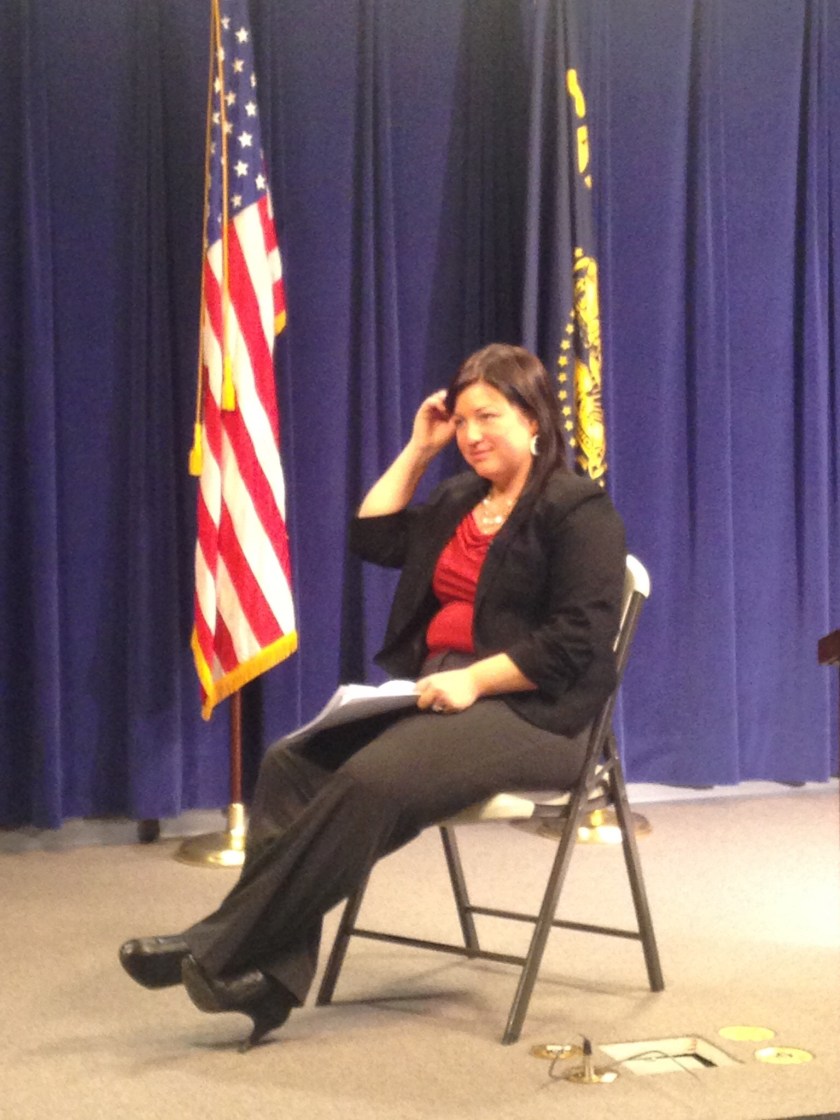
Photo Friday, Your Voice Your Vote

This Sunday a good friend of mine, fellow farmer and blogger Marie Bowers Stagg is going to be on KATU’s Your Voice Your Vote


She will be talking about the possible increase in Oregon’s minimum wage on Sunday at 9am.  She has been a constant agvocate for Oregon in business and agriculture. I suggest you tune in to hear more about why having the second highest minimum wage in the US is high enough! 

Hope everyone enjoys the beautiful weather this weekend!! Happy Friday! 

Conversation about Minimum Wage Continues in Salem

The hearings have been scheduled.  There will be five bills which all have to do with raising Oregon’s minimum wage to anywhere from $10.75 to $15.  As a business owner and an employer I am against all of these bills.  And maybe you aren’t surprised by that at all, because I’m an employer and I want to get the cheapest labor I can, right?  Well, that couldn’t be further from the truth.  Here are the real reasons why I’m against raising Oregon’s minimum wage.

1. We already have a high minimum wage.  The second highest to be exact in the United States, which is currently $9.25.  The second highest minimum wage while at the same time ranking 30th in unemployment.  I don’t think that a correlation can be made with better jobs, more jobs, and a better economy linked to just paying entry level workers a higher wage.  Minimum wage is just that, a minimum for starting out.

2. It doesn’t fix the problem that Oregon has.  What we need is more middle level jobs in Oregon, not entry level jobs that pay like middle level jobs.  You cannot expect to just not have an entry level workforce.  If you do that, it will maybe help a few workers, but the vast majority, ei high school students or others just entering the workplace will not have a job, because businesses can’t afford to hire them at such high wages.  Which leads me to point number three.

3. The money has to come from somewhere.  And for many businesses, to make this work the increase pay for entry level employees will take away from current employees.  There is no giant pot of money sitting around on our farm just waiting to be dipped into to pay for this pay increase.  The money will inevitably come from reduced hiring tactics, decreased benefits for  current employees, and  even cuts in bonus pay or yearly wage increases.

Our farm in particular has always tried to take an active role in the youth of our community.  Hiring many high school aged workers during the summer.  We do this more as a favor to them, to help them earn money for college, let them learn about the farm, how to keep a job, and the responsibilities that entails.  I know that we aren’t the only business in Oregon that takes pride in the attention that we pay to high schoolers that might not otherwise have any work experience.  But I am afraid that situations like this, will be hard to find if the cost of that worker is up to $15/hour.  It is just too high for businesses to absorb.

In the end, this isn’t a good fit for Oregon.  What we need to do in this state is focus more on working with businesses, to make them more successful and that will in turn create more jobs and more importantly create more middle level jobs.  I don’t think that falsely “creating” jobs at the middle level will do anything but harm businesses here in this state.  Just look at Seattle and the battle they are fighting, realizing that to pay people more for their hourly entry level jobs doesn’t mean people get paid more, it means less people get hired and more businesses suffering in the process.  The economics have to add up, and in this case they don’t at all.

I unfortunately can’t make it down to Salem to testify this evening, but I have no doubt there will be many farmers, and many business men and women who will be reiterating all that I have said here.  We have got to find a way for Oregon to be a more business friendly state, and I really hope that all the legislators truly listen to what those business owners are saying tonight.  We want to stay in this great state, we really want to help the economy, but we can’t do that if we keep getting beat down with regulations and higher costs.  This is not a healthy way to run our state.