We can just get it done later – Crimson Clover’s Story of 2023

This is one thing that I have to continually explain to folks. Farmers rarely have the opportunity when it comes to crop care to say, “we can just get it done later.” In a year like this when the weather isn’t cooperating to allow us to get out and care for our crops, windows are opening and closing every day.

Our crimson clover has a few of these issues going on this year. Weed control and size of the plant.

Unfortunately with our inability to access and get on the field with our sprayer (we don’t like getting stuck in the mud), we were unable to spray our usual weed control on the clover. So as the clover wakes up after being dormant so have the weeds. The window has closed to spray our normal weed control for broadleaves and we are now having to wait longer for the crop to get bigger before we apply our plan b for weed control. This isn’t ideal because the plan b herbicides aren’t as good as the ones we originally planned to use. They are also more expensive and while we wait the weeds are growing which means they will be harder to kill and control.

The clover is also really small for this time of year. It’s a crop that is usually gets planted and established in the fall and then by spring it shoots to life. Once we hit a certain amount of daylight the crop goes into reproductive mode shooting beautiful blooms up. These blooms mature after bee pollination and produce the seeds that we harvest.

We really don’t want those beautiful flowers to bloom while the stem is only a few inches high because that would mean basically little to no seed to harvest with it not having the root and stem structure to handle feeding the crop until harvest and maturity.
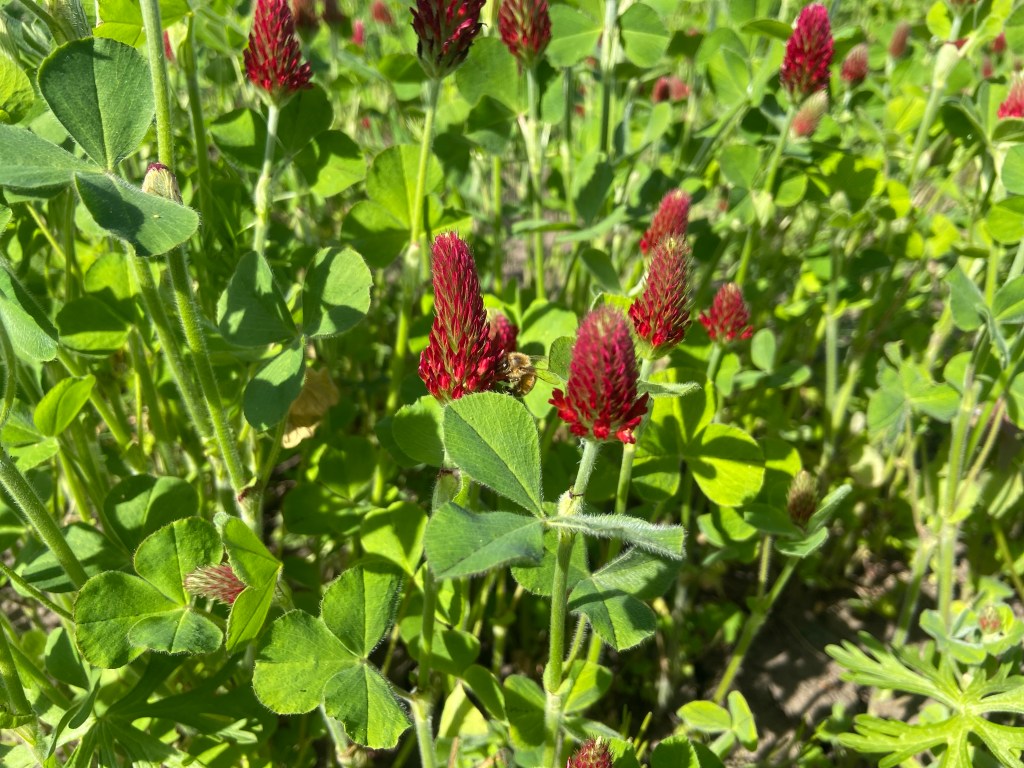
Crimson is a crop that actually puts nitrogen back into the soil so it’s a tough (and expensive) pill to swallow to put out more outputs (aka fertilizer) for a crop that you hadn’t planned on. But you don’t always have the perfect choice of what to do and a plan that can be followed 100% of the time. With a little fertilizer we are hoping to keep the plant growing and not blooming just a little longer to grow a better crop.

I wrote the beginning of this post quite awhile ago; today we are at a much different place in the crop cycle. The good news is that the crimson did grow taller and more lush with the fertilizer application. The bad news is that so did the weeds and we weren’t able to even use plan B for weed control. The plants are done blooming now, the bees have done all they can pollenating. and now we are just a few days from cutting it, letting it mature to the fullest in the windrow and combine it. Until it’s in the truck we won’t know what the decisions we made or were forced to make did or didn’t do for our yield.

That’s about the best way to sum up farming. Do all you can with what you’ve been given, and then pray the decisions made were the right ones to produce a good crop for the year. Then rinse and repeat year after year, always projecting as best you can, always pivoting when needed and Lord knows, always praying.

Weed Spraying by Backpack – It’s Not Efficient, But It’s Important

A common theme on this blog has been that farmers always try to do more with less; which is just another way of saying that in most ways possible we try to be as efficient as possible. That can be quantified in time, labor, use of tools such as chemicals, water management, etc. All of it comes down to doing more with less. But sometimes there are jobs on the farm that are really inefficient by nature and…they are really annoying.

One in particular is one that we do almost every spring, spraying some of the very hard to kill weeds that we have around our farm, sometimes in the field and sometimes on the headland of our fields. Three that quickly come to mind and are on my radar today are blackberries, wild carrots and Canadian thistle.

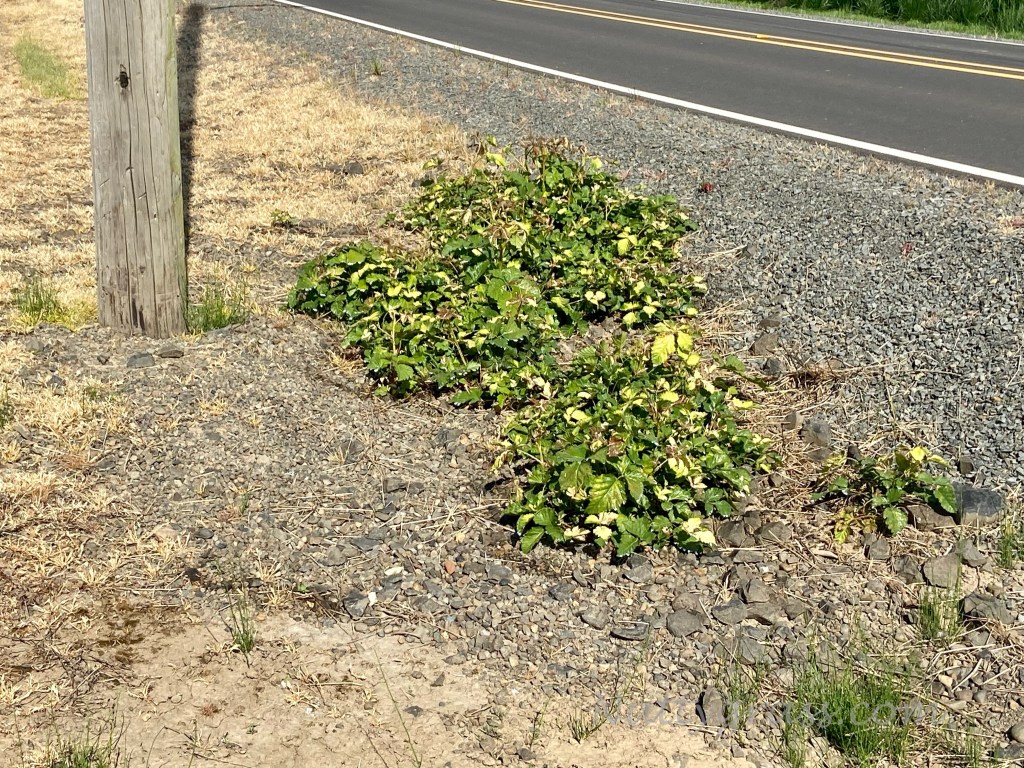
Blackberries growing along one of our orchards and the roadway.

There seems to be a well accepted myth that pesticides including herbicides kill all living things, in truth that just isn’t the case. When managing weeds in and around our fields we have to take into account the growth stage of the weed, the timing of the year, the temperature of the air, and choice of herbicides, what is labeled, and rates on the label. Also will the herbicide kill it? Will it suppress it? Will it just hold us over until something better can be used at another time of year?

The timing windows on herbicides and weed control are very important. A good example of this is that until a few years ago we didn’t have good control of blackberries in the spring when they are actively growing and starting to take over. We were not able to spray crossbow because it can easily volatilize with the heat this time of year and hurt the surrounding plants, which is not a good thing. Now we have an herbicide that is safe to use even when it gets into warmer temperatures during the spring. Adding a completely new timing window to safely and effectively control blackberries. Unfortunately however, that tool doesn’t kill or control thistles or wild carrots.

Here is a prime example of an area on the edge of one of our fields that has all three weed issues.

And here is where we hit this whole efficiency problem. Today I’m out spraying with a backpack along our borders. I’m getting areas that have blackberries first with my backpack filled with a mix of PastureGard. I’ll come back later with another backpack mixed to control thistles. And then for third time, rinse and repeat, with a backpack to kill the wild carrots.

This job is annoying because it takes 1000 years to do. But it’s also very important to keep weeds suppressed before they become an issue in the actual crop land and can quickly become a much larger, and a much bigger efficiency problem than just me with a backpack. So one could argue that by doing this annoying job, I’m actually making things more efficient for the future….I mean it doesn’t feel like that to me, but one could argue.

Out with the Old and In with the New….Filberts

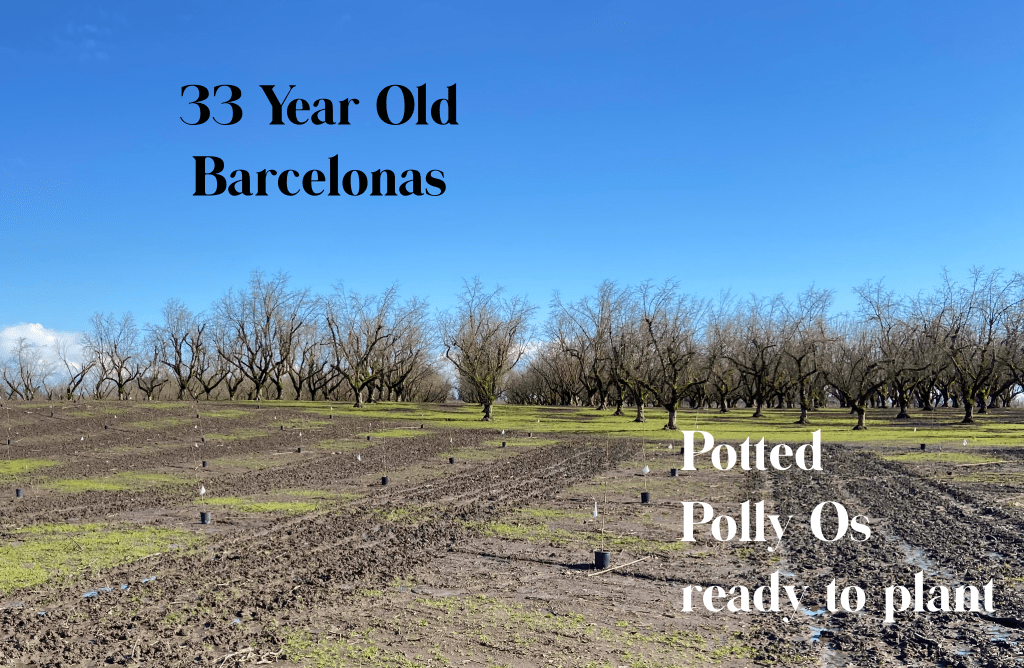
I would just write everyday about how it’s still raining, but that gets old for all of us. So instead I thought I’d share about what we did on that one day that it didn’t rain…I know you all remember it a few weeks back. We planted new filbert trees! Actually the more accurate term would probably be replacement trees because the last few years we have stopped adding new acres of hazelnuts (often referred to as filberts) here on our farm and instead are removing older varieties and planting new baby trees.

Our older varieties are Barcelona and were planted back in 1990. This was before blight was really a big “thing” in our area and not something that we had to work very hard to control or manage. That has changed a lot in the past 30 years and with new tree development from Oregon State University we have newer varieties that are resistant to the blight that we are currently having to control in our older trees.

By controlling I mean the use of heavy pruning each year and also fungicide sprays multiple times per year. In turn the new varieties help in reducing labor costs and also the use of fungicides. It’s not quite a win win however because you’re taking down a tree that has been producing an income for you and replacing it with a tree that will take years (usually around 4) before it is producing enough crop to harvest. Meanwhile we are still caring for and nurturing that tree, which all costs money.

We have been slowing chipping away at our older orchards. This planting is only 13 acres and will start to get harvested in the year 2026 or 2027. The variety of tree is Polly O’s along with a handful of pollenizer varieties mixed in as well.

We are planning to wait for a few more years before we take out the final acreage of Barcelonas, they are still producing well and while they take a little more care, it economically makes sense to wait until a few of our newer trees are making some income before completely taking everything out. It’s always easy to make an excuse to leave trees in that are producing nuts because when the price is high you need all the nuts you can get, and when the price in low you need all the nuts you can get….see what happened there, there is no good time when looked at face value, but when you sit and calculate the costs, there comes a time when you just have to move forward with a new variety.

We have had a few more days of drying the past couple of weeks and we are slowly chipping away at getting our crops fertilized, planted, and weeds killed; but it’s been frustrating so far this year. Time will tell what this all means for all of our bottom line, until then we will keep chipping away hoping for more sunshine!