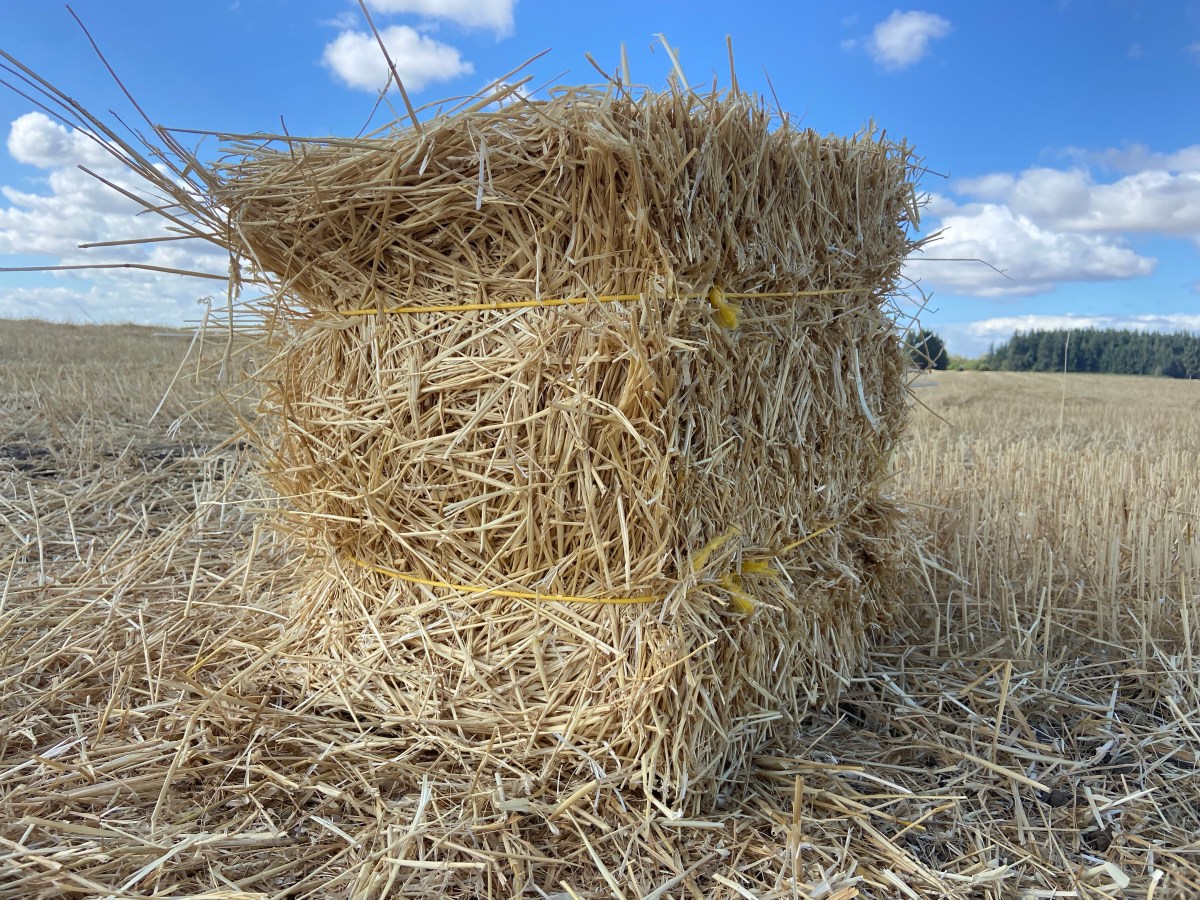
Porch Bale Project; The Kids have Bales for Sale!

Our kids have always wanted to be on the farming side of life. They constantly ask where they can work ground, plant their own fields, work on their own projects, etc. Last year the project that they took on was handmade straw bales. Together we made hundreds of hand-tied straw bales that were sold at markets, alongside the road, and by word of mouth. This year the kids wanted to add to their idea and thought “what about Indian corn?” Not sure how this venture will end….but it’s been a fun project so far with their papa.

Then one day they came to us to ask what we had planned to do with the wheat straw from the field across the road. They thought that maybe they could use a small baler, maybe they could ask the neighbor to help us out and make small bales for a porch size to sell this fall? Well being only 5, 7, and 9 years old, I wasn’t sure how much “help” they would be. I sort of figured it would look a lot like Matt and I doing all the work for “their project”. But we agreed to try it out this year, and lo and behold I was wrong.
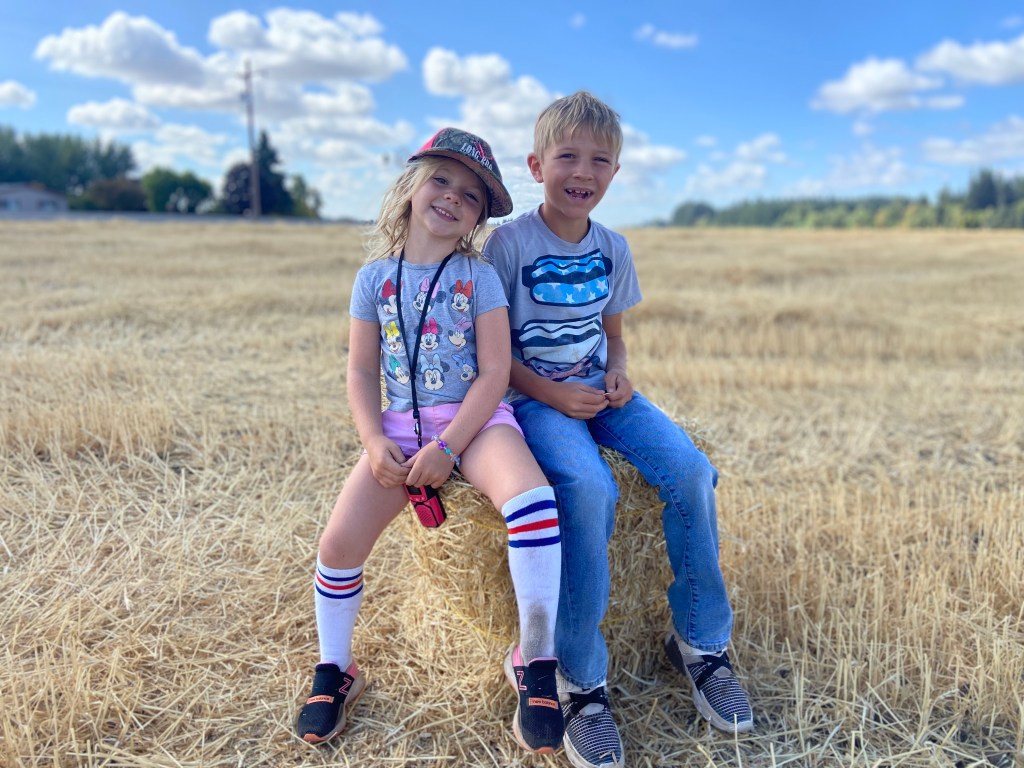
In the span of time at the start of summer when the idea was pitched to when the baler showed up in the field for their first lesson from our very kind neighbor, Hoot and Auggie had learned how to drive quite a few things around the farm; a 4-wheeler, a combine, a tractor. So, they jumped right in on the chance to do the baling and they both did great. If one was in the tractor the other, along with Millie of course, was out with me making sales to other local businesses for wholesale and thinking of other ways we could sell to local customers.

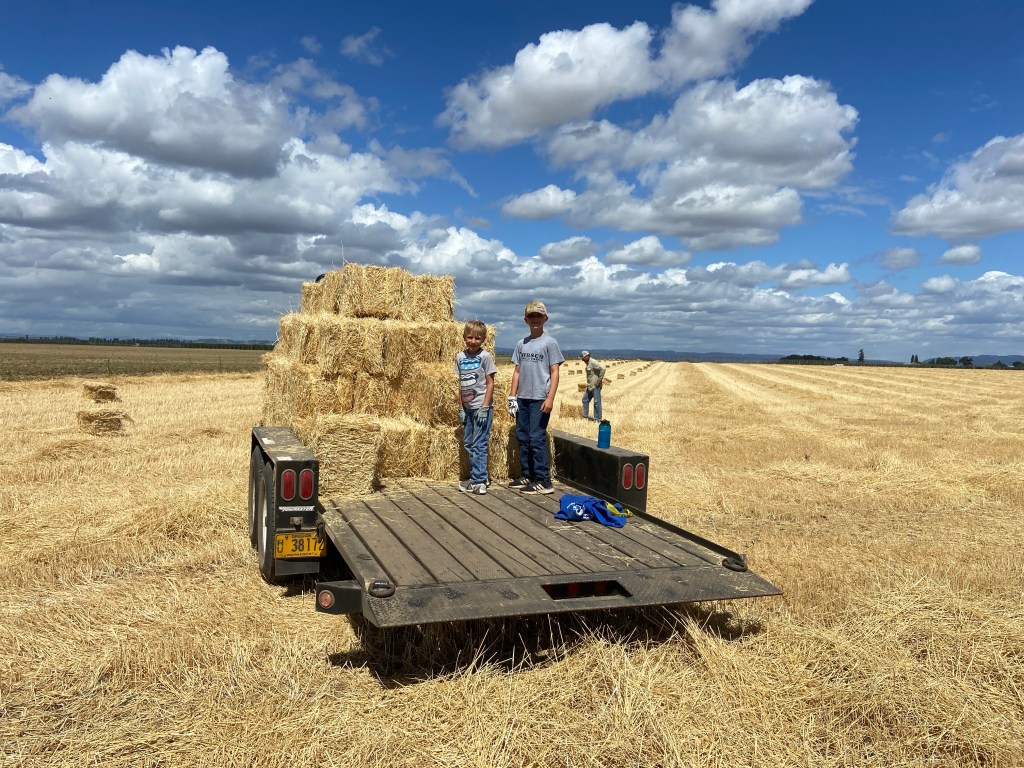
When it was time to pick up all those bales from the field, we worked as a whole family. Matt and I loaded them on to the trailer edge, the boys stacked them up and Millie along with Booker kept the tractor down the center of the rows. It didn’t take long and we had all the bales in the barn for this year for the last step of this project…selling all these bales!

It’s great to have a business that we can share so closely with our kids. I love to see how their minds find ideas and ways to do things that I never would have ventured to do myself had it not been for them asking and also their willingness to work hard to get the job done. It’s satisfying as a parent to see that in your kids at such a young age and know that we had a hand in giving them that start. They have already learned some valuable business lessons as well; which I have no doubt will serve them in their years ahead.

If you’re interested in buying any of these small porch bales (about 18” cube size) from these young entrepreneurs feel free to contact me for more information!

FarmHer April 12th, 6:30pm

Hey everyone, some exciting news!  Last fall I hosted the FarmHer team out on the farm and the episode they filmed will be airing this coming Friday April 12th, 6:30pm! Below is the press release from the FarmHer team….

FarmHer Follows Women in Agriculture from Washington to Louisiana in the 2nd Half of Season Three

(NASHVILLE, TENN. — Apr. 5, 2019) FarmHer is back with new episodes on RFD-TV.
Meet a helicopter pilot who crafts Artisan cheeses, head to the hops capital of the U.S. and witness a woman who thought she would never walk again, ranch with all her might. The network’s original series highlights another powerful group of women in its
3rd season with host Marji Guyler-Alaniz at the helm. FarmHer airs Fridays at 9:30 p.m. EST on RFD-TV.

Season 3: Episodes 19: Oregon FarmHer Harvests Piles of Grass Seed & Hazelnuts
Friday, April 12, 2019 at 9:30 p.m. ET
When dust settles on Brenda Frketich’s farm, there are piles of hazelnuts. Take in this year’s harvest in Oregon while learning about another top Pacific Northwest crop: turfgrass.

Here are also a few sneak peak videos to check out while you’re anxiously (at least I am anxious) waiting for the episode this Friday.

We had a wonderful time showing this great crew around the farm here in St. Paul.  I have always said that our doors are always open and this was a wonderful way to bring the farm into living rooms across the US.  It airs on RFDTV, click the link below to find that channel in your area!
http://www.rfdtv.com/link/649370/find-us-in-your-area

Don’t have RFD-TV?  No problem…..
On demand service can be found a bunch of different ways including Roku and Amazon Fire. The apps are either “RFD Country Club” or “Rural TV”.

Some of those apps allow you to sign up for a specific category “Rural Lifestyle” for just $2.99 a month and that’s where you can find FarmHer. You can cancel anytime.

Or you can sign up for full on demand service RFD-TV Country Club at rfdcc.com. It has a monthly fee, but with no contract, so you can cancel anytime.

Questions….as always, just ask!!


The Why, What and How of Spraying Clover Today

It is a beautiful day here in Oregon. So before the rain returns I took the opportunity to go out and spray two of our clover fields.

Why I’m Spraying:
Today I’m spraying out the wheat that is growing from the crop that we harvested this past summer.  We can’t grow the wheat as a volunteer crop, even though it looks like it would be healthy and happy, because there is a huge risk of disease.  Also this wheat was contracted seed wheat, so we can’t reproduce or replant any seeds that may have hung around another year.

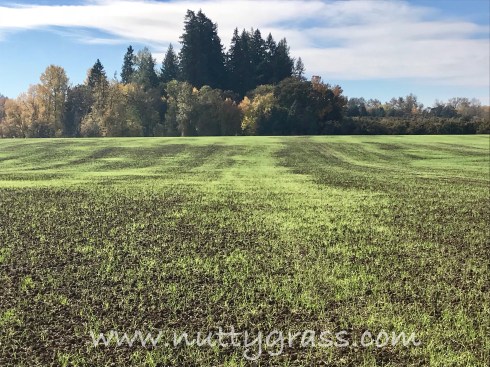
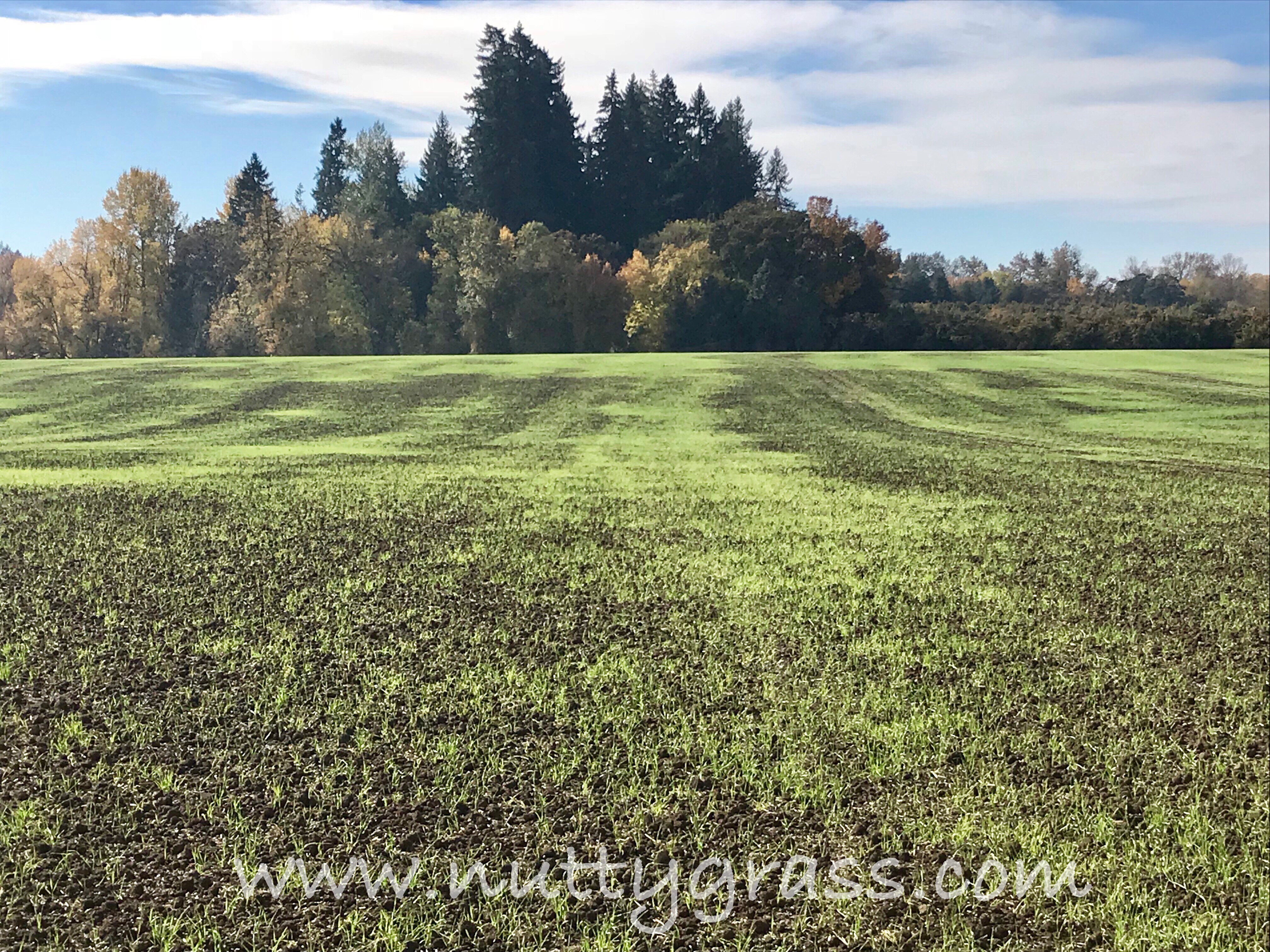
All that bright green color is volunteer wheat from the 2017 crop.

I need to kill the wheat so that the crimson clover that we planted has a chance to grow.  There is so much wheat out here that it would quickly steal not only nutrients but also water, possibly even shading out the clover.  The competition is too high so the wheat has to go.

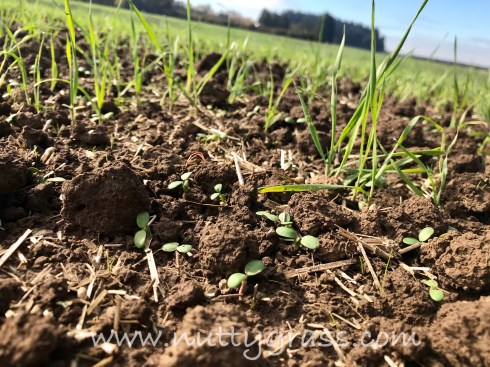
The crimson clover, our crop for 2018, are the small broadleaf plants that you see.  As you can tell, this wheat will quickly become a problem for their survival.

What I’m Spraying:
Today I’m spraying a chemical mix that is aimed at targeting only grass species so it will not hurt the small growing crimson clover.  The mix is made up of three chemicals; clethodim, crop oil, and drift reducer, and also a whole lot of water.
Why so many chemicals in this mixture that is only aimed at one species?  Well they all play their role…

  • Clethodim is the actual grass killer. It kills on contact so must be sprayed on a dry day because the rain would just wash it off the plants before they soak it in. Making the Spray useless.
  • Crop oil helps to keep the spray on the plant material and helps the plant absorb the chemical.
  • Drift reducer is used to make the mixture “heavier” so that the spray goes right where my target is.
  • The water is the carrier so I can get the correct rate of chemical equally across all the acres.

How much am I spraying?
Now this may suprise you! Per acre I’m putting on 19.64 gallons of water, 1.7 pints of crop oil, 8 ounces of clethodim, and only 3.2 ounces of drift reducer!  So literally picture a football field (which is about an acre), imagine spreading out four five gallon buckets of water, less than two pints of oil, one cup of weed killer, and a 1/3 cup of drift reducer over the entire field!!!  It’s truly incredible what you can do with spray technology, which I might add is not a new technology at all!

This “fog” that you see under my spray booms, it’s made up of 19.64 gallons of water and only 0.36 gallons of chemical!!

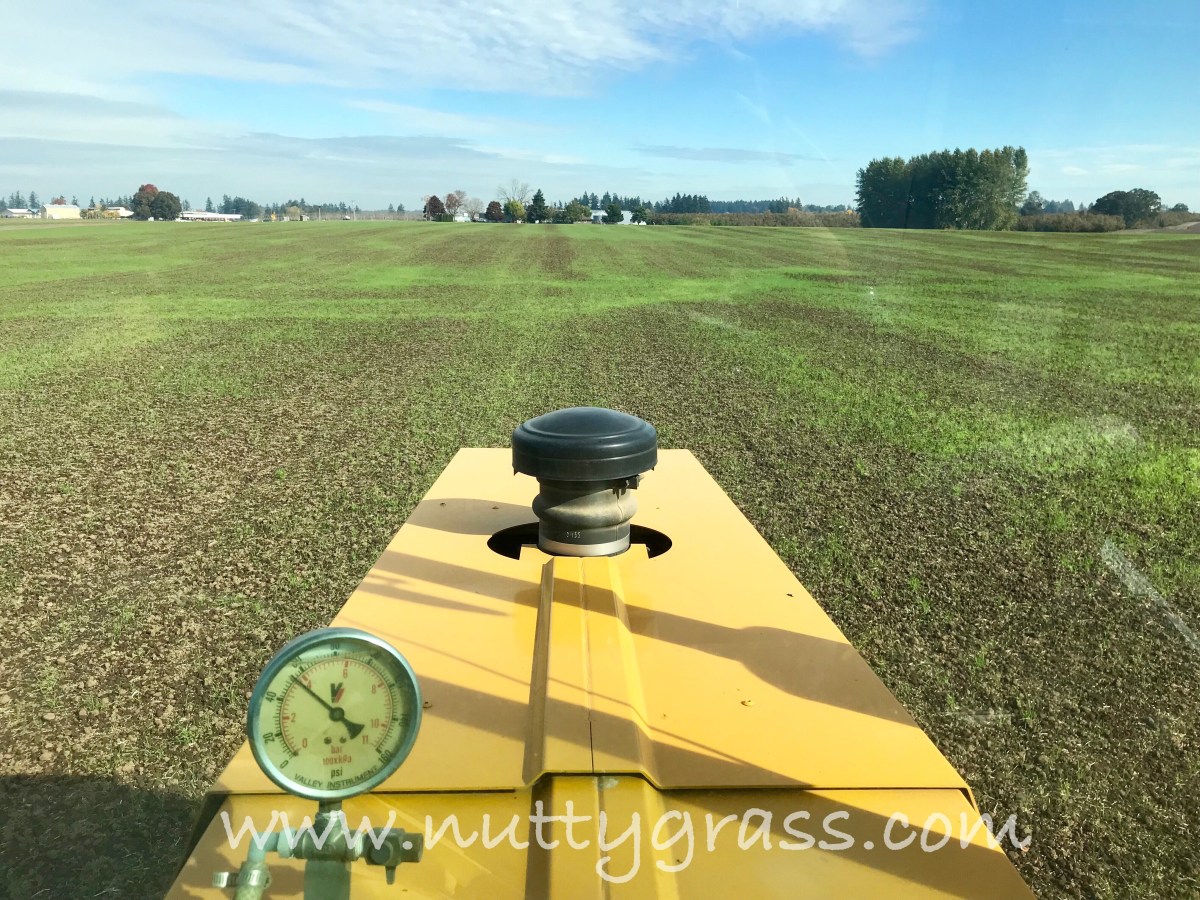
You can see from the picture above that the fog coming out of the spray boom really looks like I’m dowsing the crop.  But the reality is that with my sprayer, which has 80 foot booms, at the rate and pressure I’m spraying, I have to drive 22 feet before even 1 gallon total of spray mixture is applied.  Like I said, what we do is precise in many ways. 

So there you have it, the Why, What, and How of spraying volunteer wheat out of clover came to be my job for this sunny day.  If you have any questions about this application or any other sprays you hear of, just let me know.  I’m always here to answer questions about why we do what we do out here on the farm.