
Roots. As a farmer I can appreciate the strength behind these tiny little lines that connect plants into the soil. They bring nutrients up to the green leaves, they allow for our beautiful views and our strong crops. But while those ideas run strong in what I want to touch on today, those aren’t exactly the roots I’m talking about. Today I wanted to tell you about my family roots, arguably they may just be the strongest I have ever known, they are what have kept me grounded, kept our family solid, and yet allowed us all to also have wings and to succeed. These roots AND wings didn’t come from just anywhere, they came straight from Marlin and Arlene Hammond.
 This is a photo of our “family tree”. All 66 of us, starting in the middle with Marlin & Arlene
I call them grandpa and grandma, they are also often referred to as “the greats” in our house. And this year they both celebrated their 95th birthdays, and their 75th wedding anniversary.
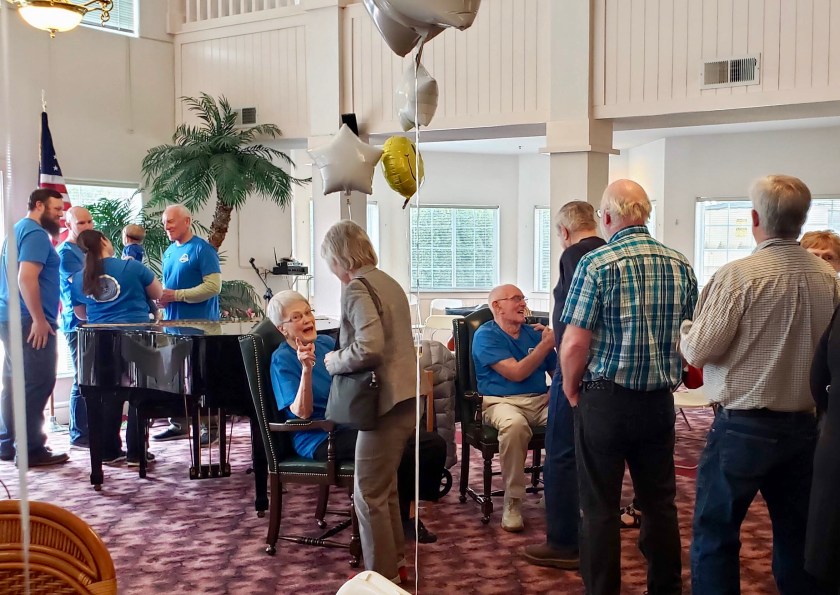
Which is something to be treasured, and more importantly something to celebrate! So that’s just what we did last weekend. Our family (all wearing matching blue t-shirts in the photos) all got together with friends from the community where Marlin and Arlene have spent their days. Lots of catching up, eating cake, laughter over old stories, and just being thankful for our wonderful family that started with just these two love birds back in 1944.
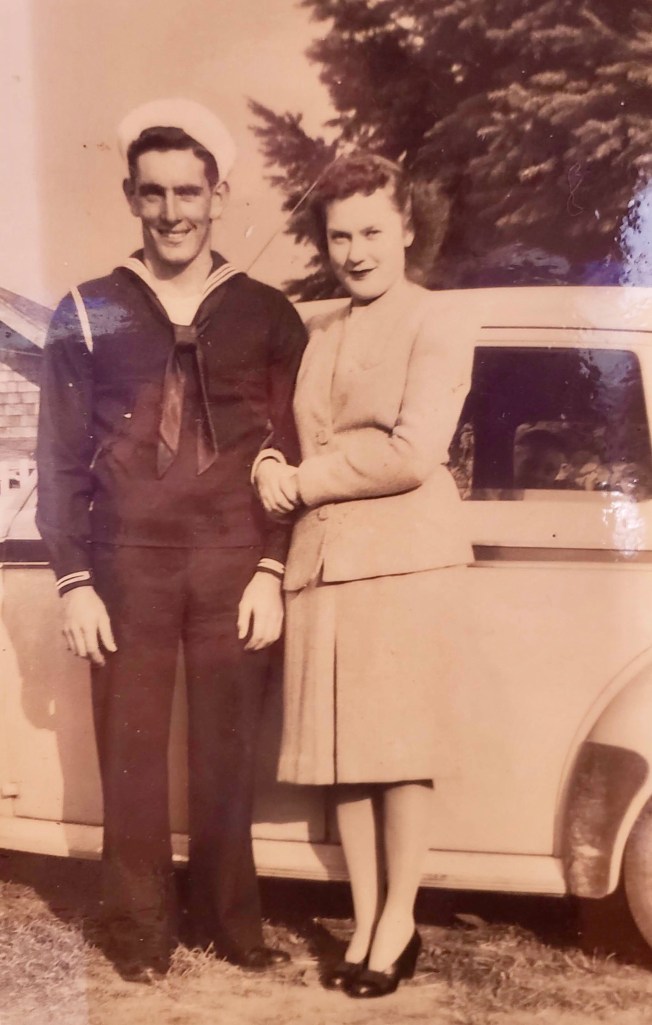 Grandpa & Grandma on their wedding day in 1944.
Marlin and Arlene went to high school together, but never dated until after graduating. They both came from hard working families, farming families, and they continued that legacy. Having many talents however grandpa was more of a jack of all trades. Doing construction, selling real estate. And grandma herself started her own fabric shop in Woodburn. These two were as traditional as they come, and yet innovative and not afraid to work hard for what they wanted. And they also get a kick out of life at every stage. I think the one thing I always think of when I think of them is how they know how to laugh, boy oh boy do we laugh together! It might help that my kids are at a general “if you’re not laughing then you’d probably be crying” stage of child management. But I learned a lot of that from these two. For example…this was the only photo I took on this fun celebration day….it’s horrible but it’s also hilarious…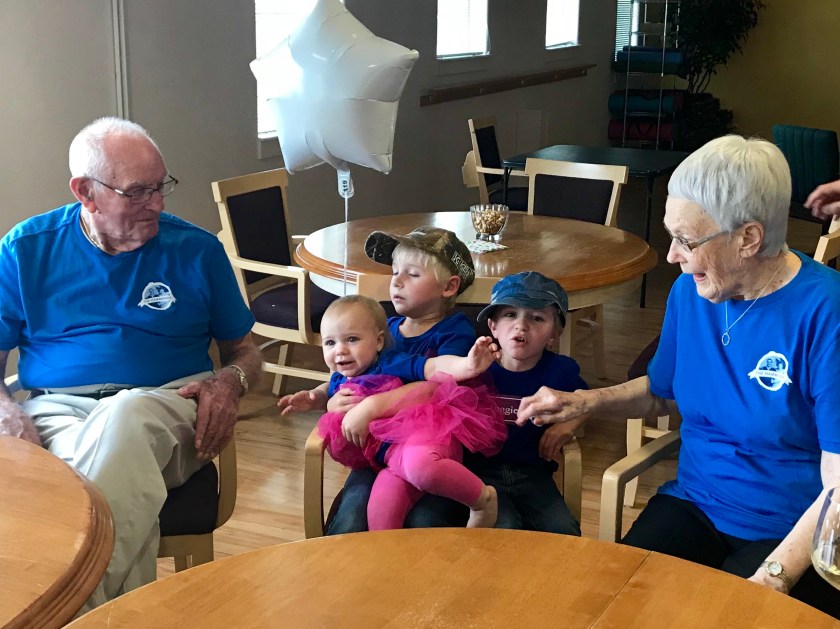
I had the pleasure of sitting down one afternoon with my grandma to ask her about marriage and advice for married couples. I was officiating the wedding of a good friend and my cousin and I thought who better to start them off on the right foot than grandpa and grandma who had been married (at that time) for 73 years.
So in honor of their 75th I thought I would pass it along to all of you.
So while you are both just starting this journey of marriage, and I know you will get a LOT of advice as the years go by. But I thought it would be only fitting to ask the longest married couple in our family if they had any words of wisdom for the shortest married couple in our family. So I sat down Marlin & Arlene, who have been married for 73 years to find out what the secret is to making marriage & love last. I wanted advice for you as newlyweds, when you hit year 25, and then once you get to year 73!
Their first year was a bit unorthodox, grandpa was in the war and gone basically the entire time, grandma says it still gives her chills to think about how hard that time was. She said for the first years, don’t worry about all the nitty gritty. Something will always cause a trouble or a problem, so you might as well make the most of it. She also showed me a letter from a friend in 1944 that she often thought of, it says that in marriage everything is 50-50 but sometimes things can get 60-40 or worse, but they can be righted always.
So what about at 25 years into marriage? They said that they hit a time where they got to really enjoy life again, to reconnect, new careers and dreams were able to get started again. At the end of 25 years, they realized that marriage is full of seasons, and you have to keep your commitment strong so you can both enjoy the dividends of that lifelong investment in love.
And finally after 73 year down the path of marriage…when I asked what that is like, grandma just said, “To take care of each other, to have created such a happy home, to have someone to talk with, reminisce with and share all those memories. It’s just marvelous!” When you get there, you get to spend your whole life with your person, it’s completely worth all of it. I want to also add that grandpa and grandma were friends for years before they ever dated, which I think means you two are also off to very similar and very good start.
These two have created a legacy that will extent well beyond their lives, my life and as we know for now at least into the 5th generation. I can’t imagine all that they have seen in their lifetime. I can hardly believe what I have seen in only a third of that time. But what I do know is that the roots and the wings that we have all gotten from them will prove timeless, even as the years pass by. Here are two articles with a few great stories:
Hammonds Celebrate 75 Years Together
Engagements: Marlin & Arlene Hammond
**A special thanks to cousin Brock for all the awesome photos that I borrowed. To Kristen for all the work on the graphic designs for T-shirts. And for everyone in the fam for all the help organizing, cutting cake, setting up and taking down! Family efforts for sure!


