Why grow Crimson Clover for Seed?

The first crop that we will harvest this year is crimson clover.  I have shown you a few pictures through the year of how this crop is coming along.  2013-01-13_16-47-10_7932013-05-05_11-48-45_8332013-05-07_19-29-59_707And now finally the seeds are starting to mature and it looks like we may be swathing (cutting the crop into rows for combining) very soon!  Again, I know what you all are thinking, “Way to go farm girl….aren’t you planning to get married in a few weeks?”  Well yes, the wedding is still on, we may just have to fit harvest in there sometime too!!

2013-06-10_08-05-49_9852013-06-10_08-07-11_457The seeds when they are ripe or mature, turn that golden almost mustard color.  You can see that these seeds I checked this morning are still pretty green.

But the question comes back, “Why plant Crimson? You can’t eat it, you can’t plant it for a yard, it can’t be used for fiber or fuel…what is the big deal?”  As an end product the simplest answer is that it is used many times as a cover crop.  It helps not only keep the soil in it’s place, but it can also shade the soil, protect top soil, reduce moisture loss, and it also adds nitrogen back into the soil.  But for farmers in this area, who just grow the seed and then sell it off all around the world for a cover crop, it also gives us many advantages.

There was an article in the Capital Press all about this crop and why it’s becoming so popular. You can read about it in this article that was published a few weeks ago…there may be a farmer you recognize in there! Crimson Clover Catches On

“Brenda Kirsch and other farmers in Oregon’s Willamette Valley often plant it after grass seed and wheat crops, helping to suppress weeds like annual bluegrass due to broader herbicide options. ‘The ability to clean up a field is just invaluable,’ Kirsch said.”

You can see in the article that this is a good rotational crop for our area, and a good cover crop for areas all around the United States, and we hope that this trend continues.

“Even with the rising prominence of cover crops, probably fewer than 1 percent of Midwestern growers use them, Wirth said. If that level someday reaches 20 percent, which is realistic, the market opportunity for seeds is great.”  said Don Wirth, a farmer in Junction City Oregon.

I have said many times that we are lucky to live in an area where we have choices on what we can grow from year to year.  I think that crimson is one that will stay in our soil for many years to come!  And I’m glad that I will only have to deal with driving a swather in my wedding dress one time in my life!

Photo Friday

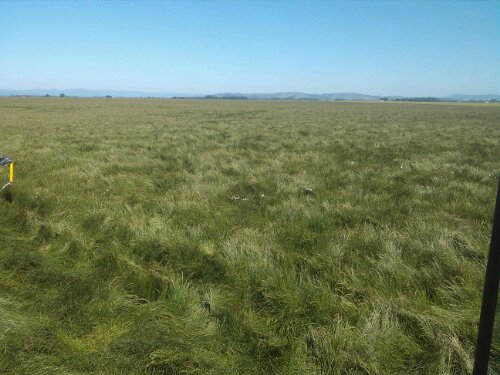
Remember those pesky slugs who feasted on our grass seed crops all winter? Well as I was out spraying this past week I found quite a few areas that just never recovered. If you didn’t believe me that they did damage, here’s a few photos from this past week!

image

image

Here is a part of the field that didn’t get eaten down as bad, it’s looking much better!

image

image

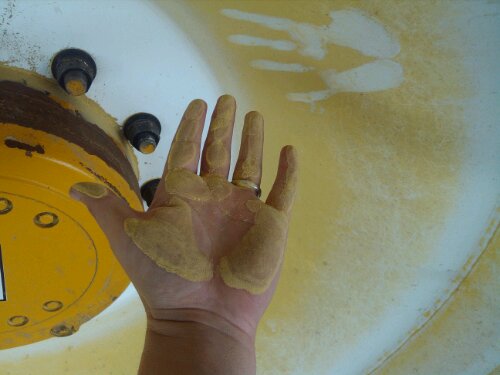
On another note, looks like the pollen is flying! This is it stuck to my sprayer tires!

image

image

Better get out your grass allergy medicine if you live in the Willamette Valley!

GMO Wheat in Oregon

While I was at the Oregon State University Field Day the announcement came that there has been GMO wheat found in Oregon. While this may not seem like something to worry about, others feel as though the world is ending, and while still other people may still just not care. So I’ll let you know from my perspective why this may not be too concerning, why this worries me, and why in some cases this may add fuel to the anti GMO fire.

To start off, GMO wheat has not been released for production agriculture. There were some trials done in Eastern Oregon back in the early 2000’s but that trial ended in 2004. So far they have not figured out where the GMO (Round up resistant) wheat has come from. But there is well documented information on how Monsanto, after ending the trials, went through a rigorous process to end the trials. Monsanto said, “…the USDA’s report that its near decade-old Roundup Ready wheat trait had been found in a single field raised important questions about the circumstance and source of the presence. Monsanto’s process for closing out the Roundup Ready wheat program was rigorous, well-documented and audited. The company’s own internal investigation has confirmed that it did not have any prior test site at the location where the material under investigation was reported to have been present.”

The good news is that from a health perspective there is nothing to be scared of. GMO wheat has been tested just as rigorously as corn, soybeans and other GMO crops that are sold on the market widely. So the reality of contamination is there, but the reality of something to fear with food safety is not. Also there is a high level of transparency as they get this all figured out. Starting at the level of the farmer, who took it upon themselves to do the right thing and report what was going on in their field. They had the choice to just be quiet, but the implications could have been much larger for an industry that is the 5th highest commodity in Oregon and the #1 highest exported crop.

The part that concerns me the most is what this is going to do for the business side of things. Majority of the wheat from the Pacific Northwest heads over to Japan, Taiwan and South Korea. All of which have shown some concern over GMO crops. As of May 30th, they have suspended their regular tender. I don’t have an update on this, as far as if they have re-instated their usual buying or if they are still suspended. But this just goes to show that there could be some concern for farmers in our area selling their wheat, if the largest buyer of it, will start to institute more testing from our end to prove that the GMO gene is not in our products.

Another large concern I have is that this will only add flame to the anti GMO fever that has been growing around Oregon. Personally I think we should call it an anti-science movement because most conspiracy theory enthusiasts make this easy jump from denying scientific data and just claim that there is some conspiracy by “big ag”. Hence the March on Monsanto that just happened a week ago. “I think the controversy over GMOs represents one of the greatest science communications failures of the past half-century. Millions, possibly billions, of people have come to believe what is essentially a conspiracy theory, generating fear and misunderstanding about a whole class of technologies on an unprecedentedly global scale.” This is a quote from Mark Lynas, one of the huge supporters of anti GMO movements across the country. But in the most recent past has started to look at the science instead of the drama and in his most recent speech says,

“I am a historian, and history surely offers us, from witch trials to eugenics, numerous examples of how when public misunderstanding and superstition becomes widespread on an issue, irrational policymaking is the inevitable consequence, and great damage is done to peoples’ lives as a result. This is what has happened with the GMOs food scare in Europe, Africa and many other parts of the world. Allowing anti-GMO activists to dictate policymaking on biotechnology is like putting homeopaths in charge of the health service, or asking anti-vaccine campaigners to take the lead in eradicating polio.”

If you listen to his entire speech you can see how GMO’s haven’t only helped many people, there have also been a number of people that have died because they didn’t have GMO products available to them. This is a sad and scary reality.

The investigation into what is going to happen in Oregon and to our ag markets is yet to be seen.  This will be a process in which transparency, cooperation and information will be key. No one, including Monsanto and us farmers want to see GMO wheat production go into play until it is meant to be released and the market is ready for the products we could provide. So let’s be concerned, but for the right reasons!