Orchard Work Continues

This time of year it sure feels like we spend a whole lot of time out in our hazelnut orchards!  Last week during all the freezing weather, while we were flailing, we were also knocking trees over.  Which may seem strange, but it was time!final-18
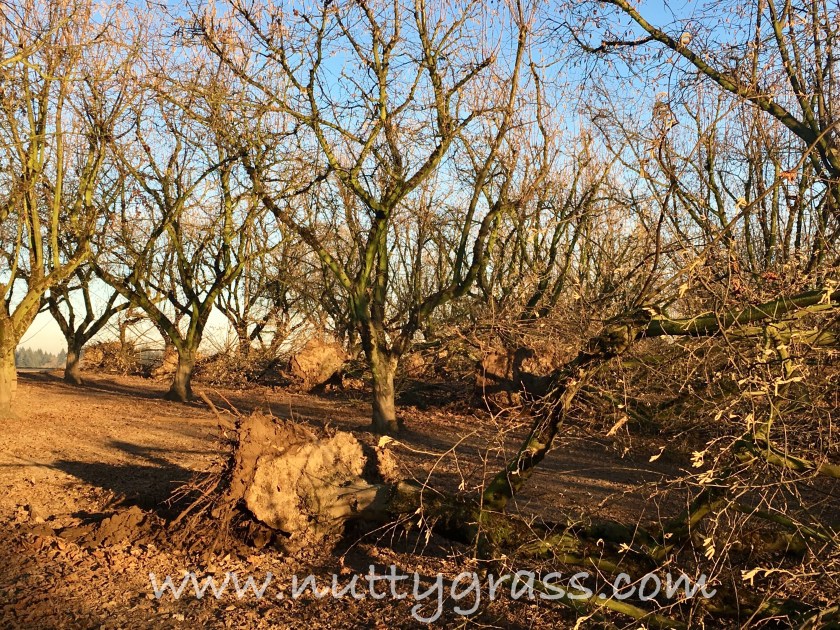
Filbert or hazelnut trees need a certain amount of room to grow.  The sun needs to get down into the branches and those branches need to have room to stretch out in order for them to produce to their highest potential.  Our trees have been in a constant cycle of removal for about the past 8 years.  We have done it in cycles mostly because of the windows of opportunities that you get, when we have the labor, and also when we have the time to get this job accomplished.final-19
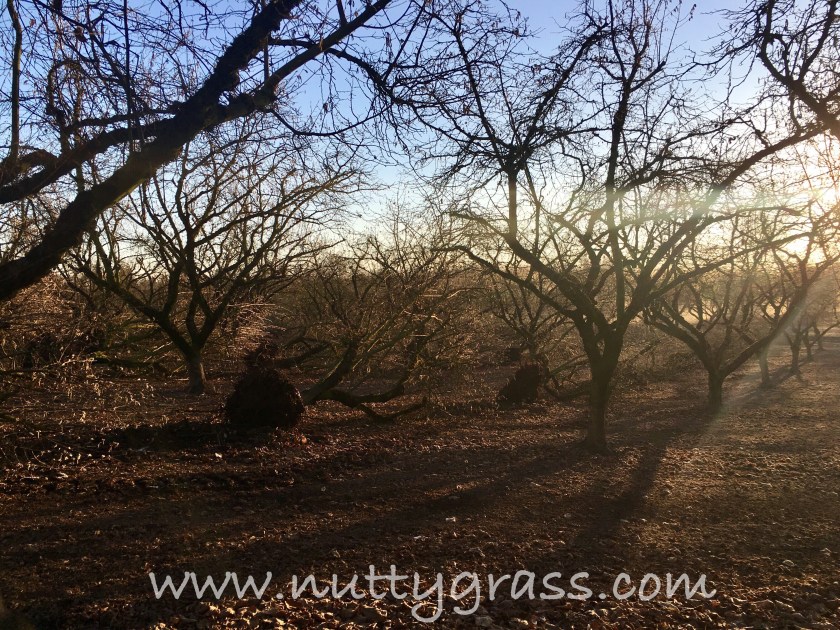
Well last week we took out the last trees that needed to be removed, and I can thankfully say, while this job isn’t over yet, it’s well on it’s way.  I’ll say here that one of the hardest things about tree removal is all mental.  When the prices are good for nuts you want to leave the trees in, knowing that for the first few years you will have a dramatic decrease in yield until the trees that remain can catch back up.  So more nuts, is more money.  But then when the prices are down you think, “Shoot I can’t take the trees out this year, we need all the nuts we can get because the price is so low.”  You see what I mean…it’s a battle.  So this year while harvesting we noticed that the yields were dropping in the areas we hadn’t thinned, the trees needed the room, it was time (no matter what the price!).  final-21

Here is a video of how the thinning was done.  We planted originally on a square grid of 18′ by 18′.  Then we thinned, or pushed over the trees on a diagonal.  Leaving a diamond pattern of 18′ by 36′.  This will give room for the tree branches to stretch, and the sun to get into the canopy.

Meanwhile we are also out pruning suckers that grow from the base of the tree, and pruning out blight.  Basically from the day we finish harvest in the fall until spring, there isn’t a day that we don’t have someone working out in those trees.

Next step will be pulling those trees out of the orchard, which is another blog post in itself. And hopefully not a too muddy of one. Who knows, maybe more freezing weather will help us get that job done with little mess too!
Flailing in the Freeze

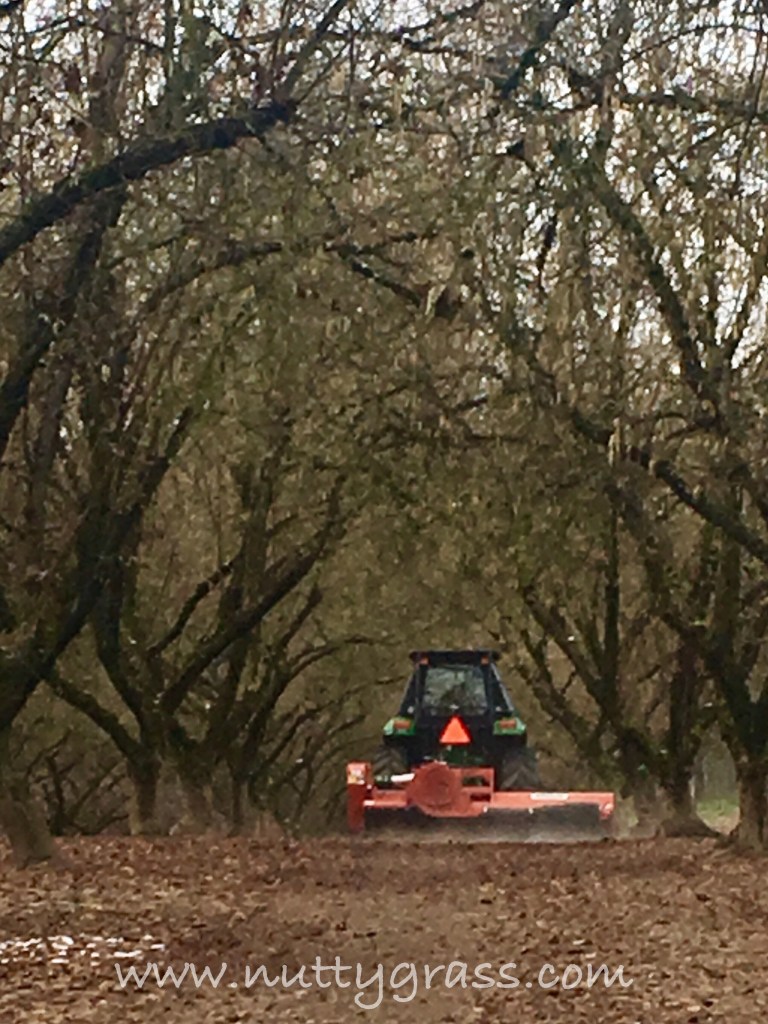
The work around here never really ends, it just changes with the weather.  We always have jobs lined up for “Once the sun comes out”, “Once the rain stops”, “Once the water goes down”, or “Once the ground freezes.” Flailing the orchards was on the list for this week’s freezing weather, currently it’s in the 20’s here.  (And yes I know…that’s basically balmy when compared to the rest of the country).

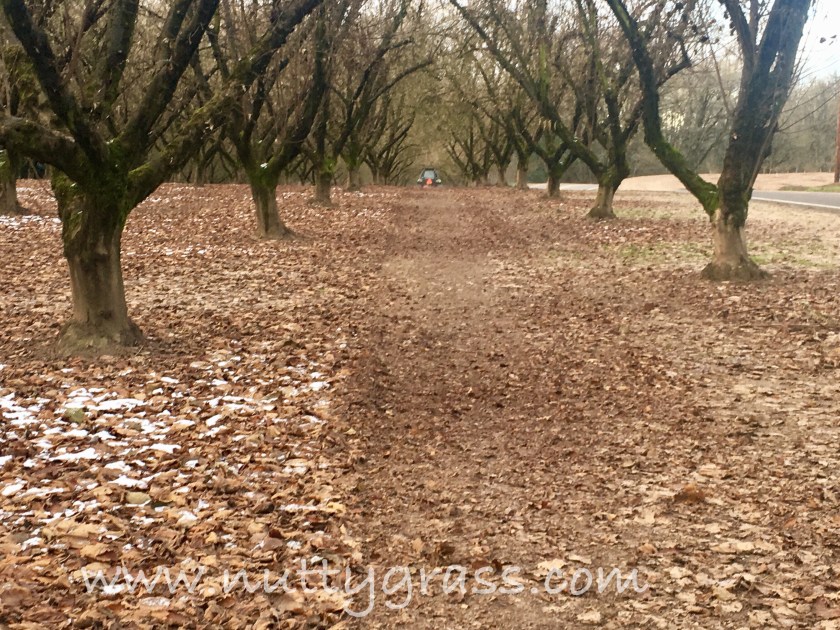
When the leaves fall in our hazelnut orchards we try to find opportunities to get out there with the flail and break up the leaves.  Unfortunately once the leaves fall, not far behind is usually that famous Oregon rain.  We don’t want to rut up our orchard floors because of the mud, so our opportunity to go out and chop up the leaves is saved for either very dry weather or very cold weather. This year we didn’t get much dry, so we were looking froward to some cold.  And this week we got what we were looking for.final-17

So why bother flailing at all?  Well, flailing up the leaves helps them to break down faster, putting nutrients back into the soil.  It also acts as a mulch for our orchard floors.  It helps us too when we go to push brush out of the orchards from pruning.  If we try to push through all those leaves many times we just pull them out of the orchard with the branches.  When the leaf pieces are smaller they tend to fall back down and stay on the ground.  Good for us, good for the worms, good for the soil!final-14

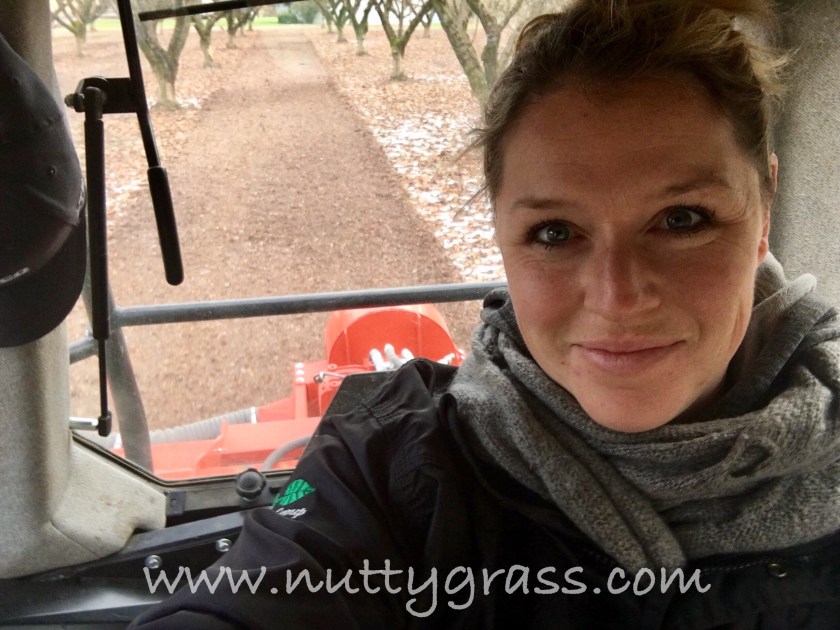
We don’t always get the chance to do this project, but I can tell you being the one inside a tractor when it’s only 20 degrees is about the best job on the farm right now!final-13

Stay warm out there!! Happy Friday!


AM Northwest


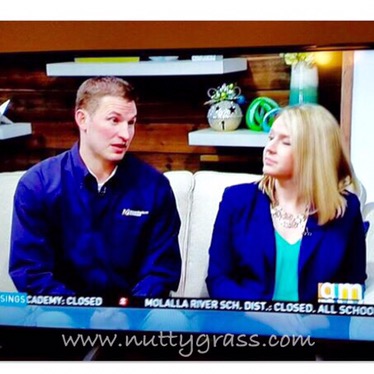
My busy week was capped off last Friday with a pretty cool experience. Another farmer, Jesse Rue and myself made the trek up to Portland to go on live TV and talk about grass seed and family farming!

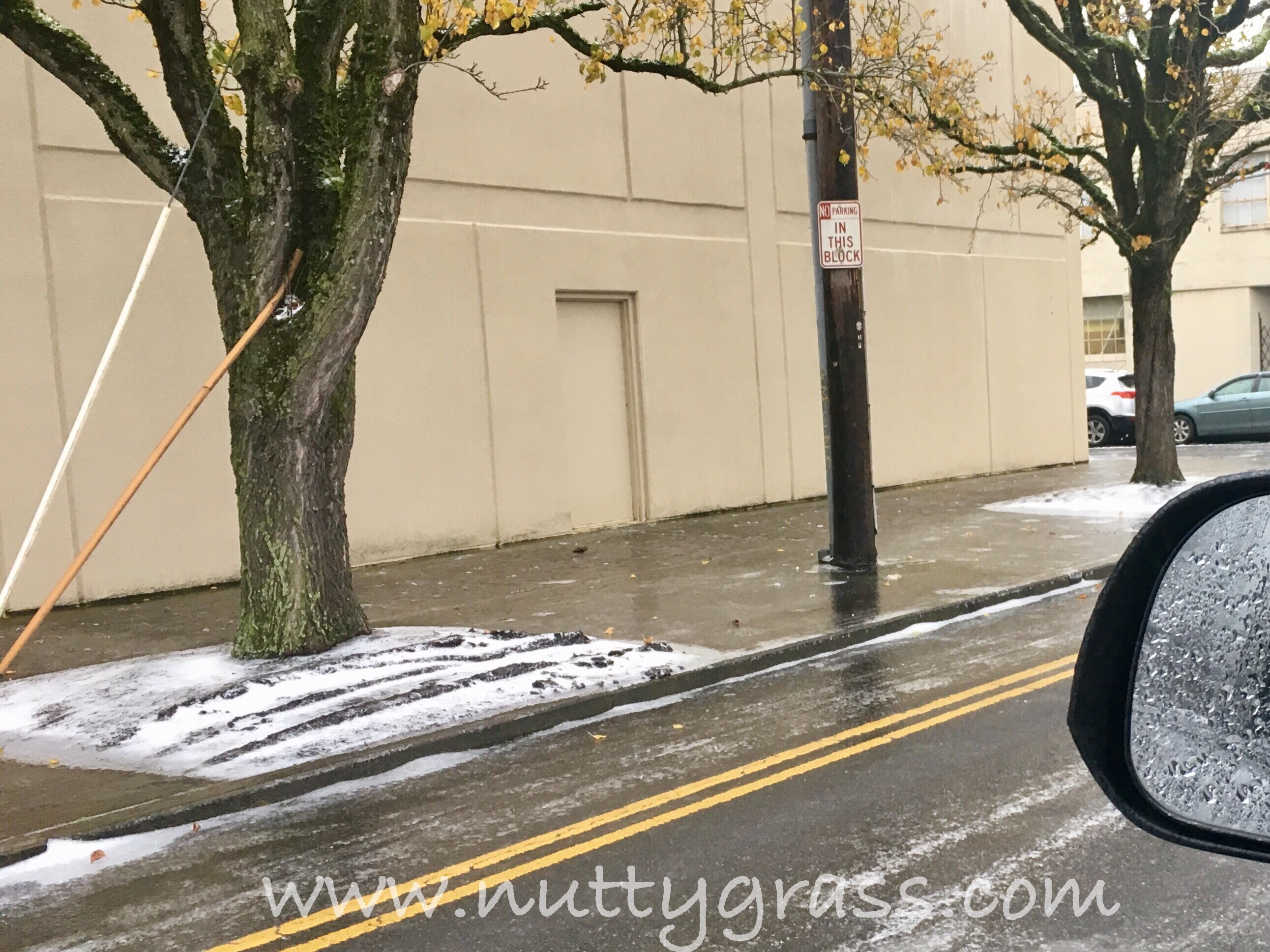
I say trek because it was during some pretty great winter blast moments. The roads weren’t too bad, just the side streets. Which proved almost too much for me and my heels!

All that shiny business…is ice!! So Jesse and I walked, skated, mostly just slowly scooted along the icey sidewalks to get into the studio…we looked like 90 years olds we were walking SO slow!

Here is a link to our segment!

AM Northwest, KATU

It was a very cool experience to shoot live TV and talk about what I am so passionate about! Here are just a few facts that we covered…

  • 98% of farms in Oregon are family owned.
  • There are also 1174 century farms (over 100 years old) here!
  • Grass seed production takes up 400k acres in Oregon. 90% of those acres are in the Willamette Valley.
  • Grass seed provides $1.2 billion to Oregon’s economy.
  • Grass seed as an industry provides over 10,000 jobs in Oregon.
  • Grass has great environmental benefits.  Erosion control, soil cooling, and water filtration.

To learn more great things about Oregon grass seed check out Oregon Seed Council’s website: www.oregonseedcouncil.org.