Tractor’s Farewell

As our Cat 45 headed down the road and we said farewell
I took a deep breath and reminded myself it was just time to sell.

She’s worked our dirt for 22 years, at least 10 times over
Getting fields ready for grass seed, green beans, wheat and clover.

She’s hooked up to many harrows, plows and disks
Even in tough conditions she always pulled, taking all the risks.

A few years back we dressed her up a bit and gave her auto-steer
But at the end of the day even that couldn’t justify keeping her here.

She’s broke down, been cussed and kicked more than a time or two
But she still got washed up to be put away for winter, cuz that’s just what we do.

A new hydraulic pump to end her last season on our farm
Her last winter getting parked inside our barn.

It’s funny this feeling of being attached to a machine
But these pieces of equipment have always been a part of my dream.

For those of us who measure memories in acres in the heat of the summer;
You know these treasured moments between just a tractor and just a farmer.

Memories of kids sitting next to you learning all the ropes.
Knowing for a fact that having them want to sit there gives our legacy a little hope.

It was our last rolling stock with big tracks and my grandpa will probably roll over in his grave.
Except that little D2 parked in the lean too there, I’m afraid that one we are gonna to have to save.

I may have had a tear as the kids said goodbye and wished her adieu
See you down the road old friend, I hope your new farmer takes good care of you.

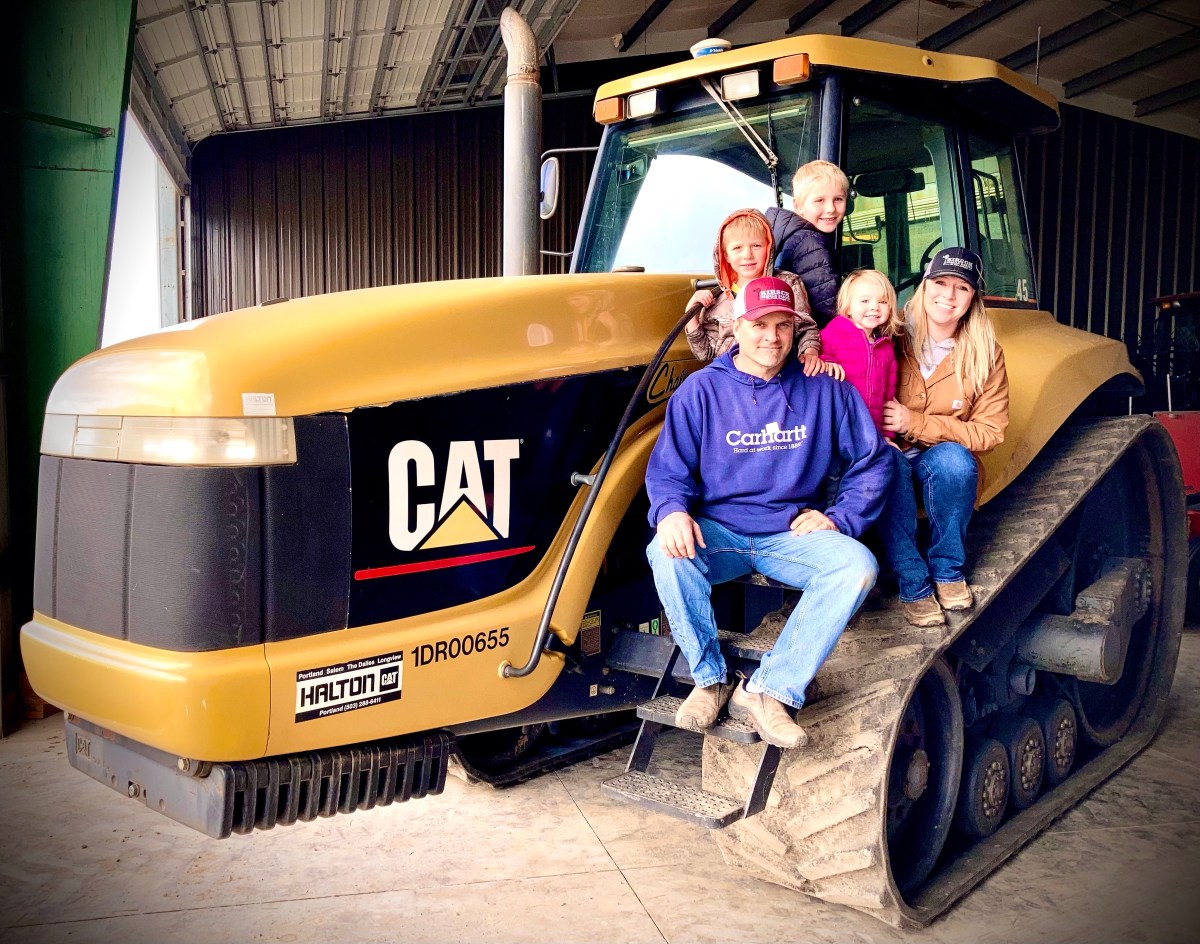
Obligatory family photo.
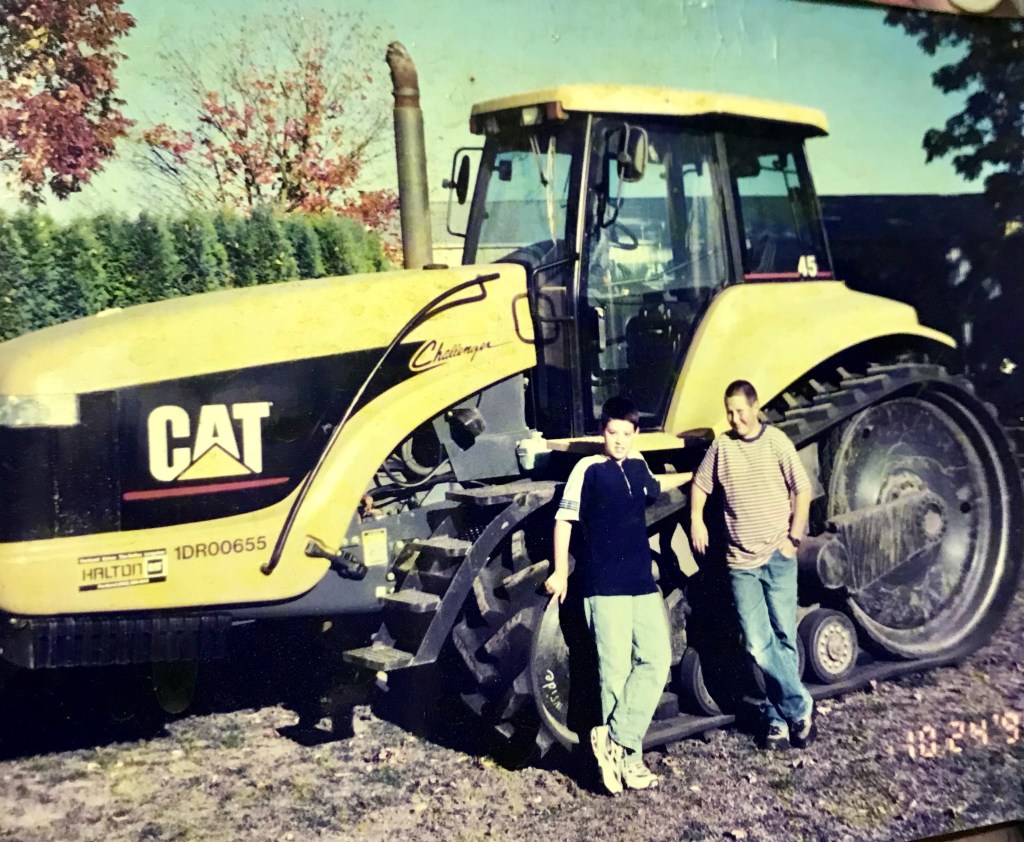
My brother Kyle and cousin when we first brought her home.

I also posted a video of me reading this poem. You can find it on the NuttyGrass Facebook page or by clicking here for a direct link.

Removing Older Hazelnut Trees

I wrote last week about how we planted some new trees to replace some of our oldest orchards. Feel free to catch up by reading….“Replacing Older Hazelnut Trees”.

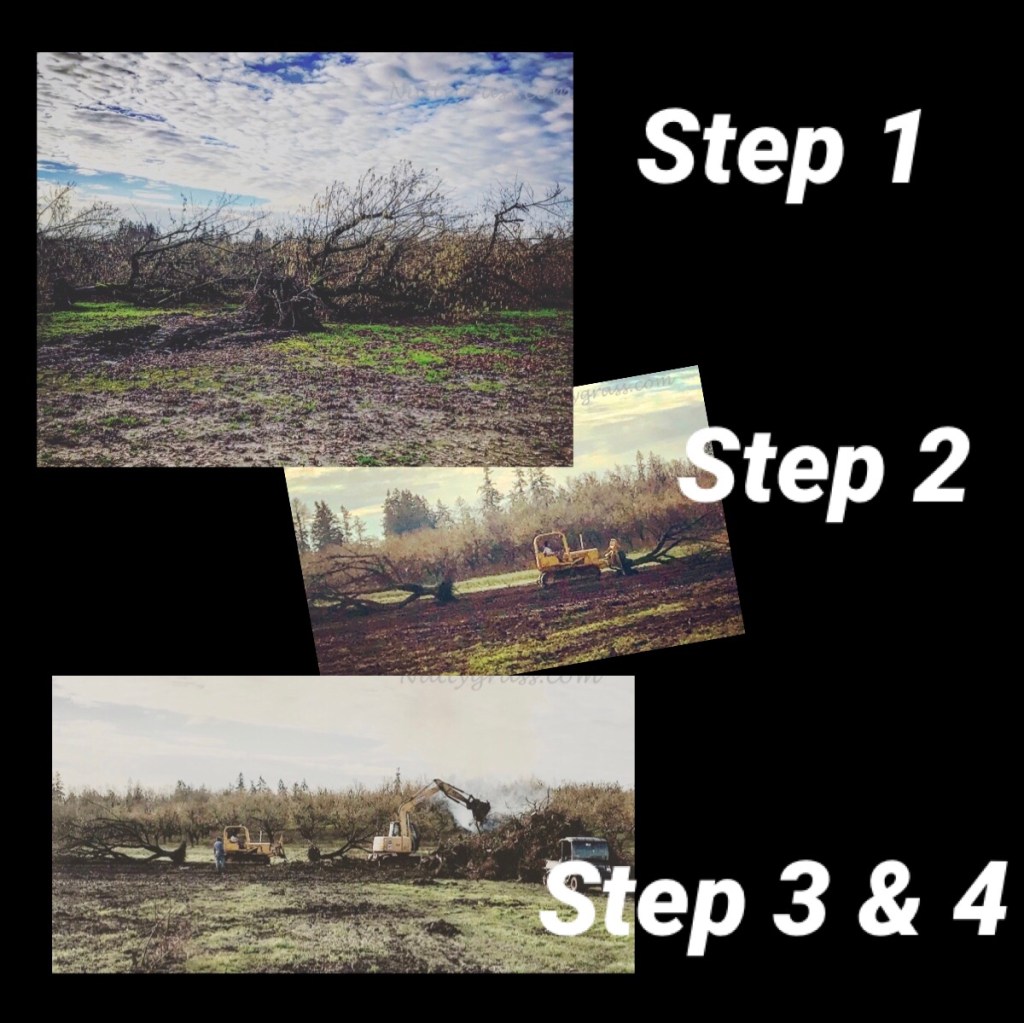
This week I thought I would show you how we are actually doing that work of tree removal. As farmers we often have a lot of equipment, but we don’t always have the “right equipment” for every job. So what we have in the barn often times changes how we go about a project.

For our farm we have our excavator, bulldozer, and a very hot fire. With these tools we completed this job pretty much done in a few days. I say “pretty much” because the weather turned on us mid-project and we had to take a break to let things dry out a bit.

Here are the very complicated, very long steps of tree removal…
Step 1: Knock the trees over with the bulldozer.
Step 2: Start a very hot fire.
Step 3: Drag the trees to the burn pile.
Step 4: Put the tree on the very hot fire with the excavator.
….and voila!

As you can see the process actually really is very simple. Our goal here is to try to touch the tree as little as possible, because every time we do it costs us money in efficiency loss.

Now if you want to start an actual controversial orchard conversation we can chat about variety to plant, how or when to thin double density plantings, how to prune, or what spacing to plant. But you better have a comfy seat, and a lot of coffee or a lot of beer, because those discussions will take awhile!

Blooming Crimson Clover

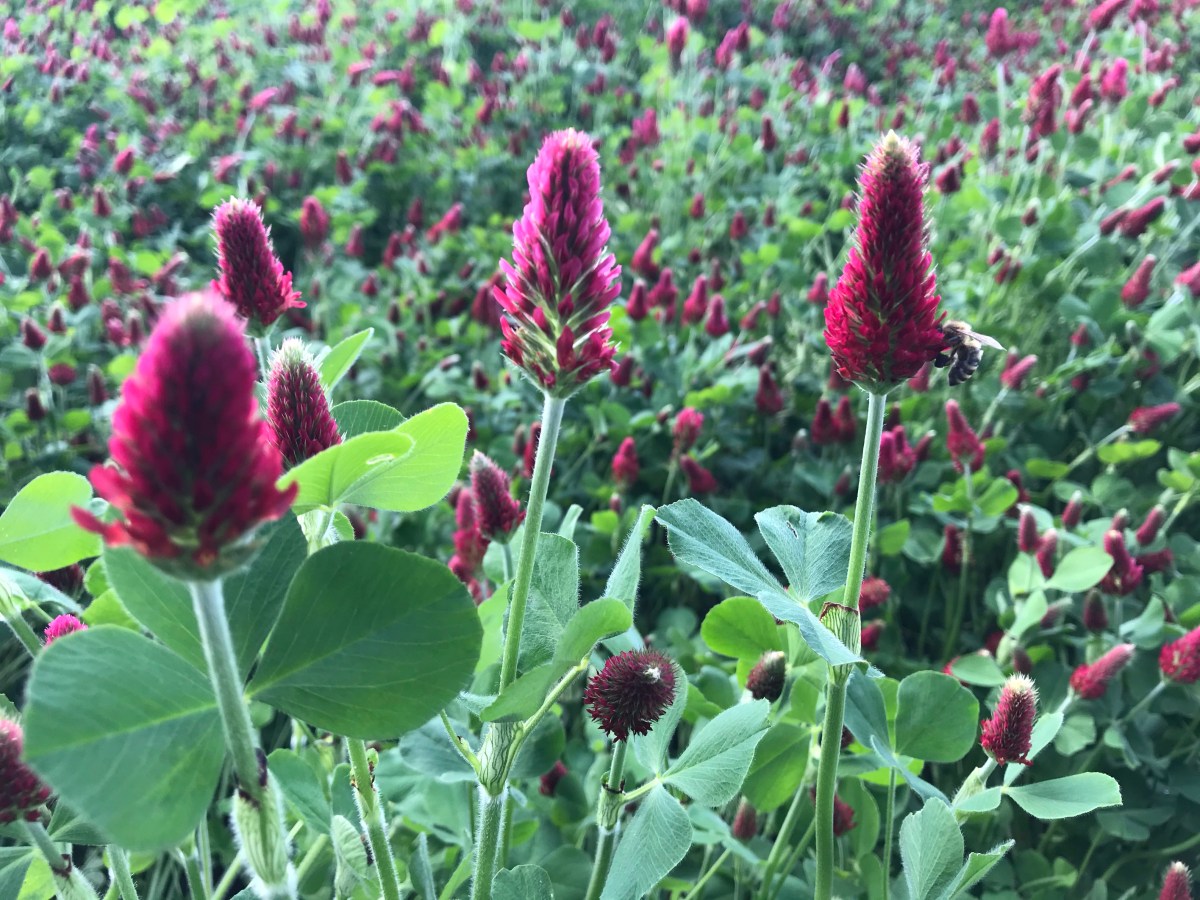
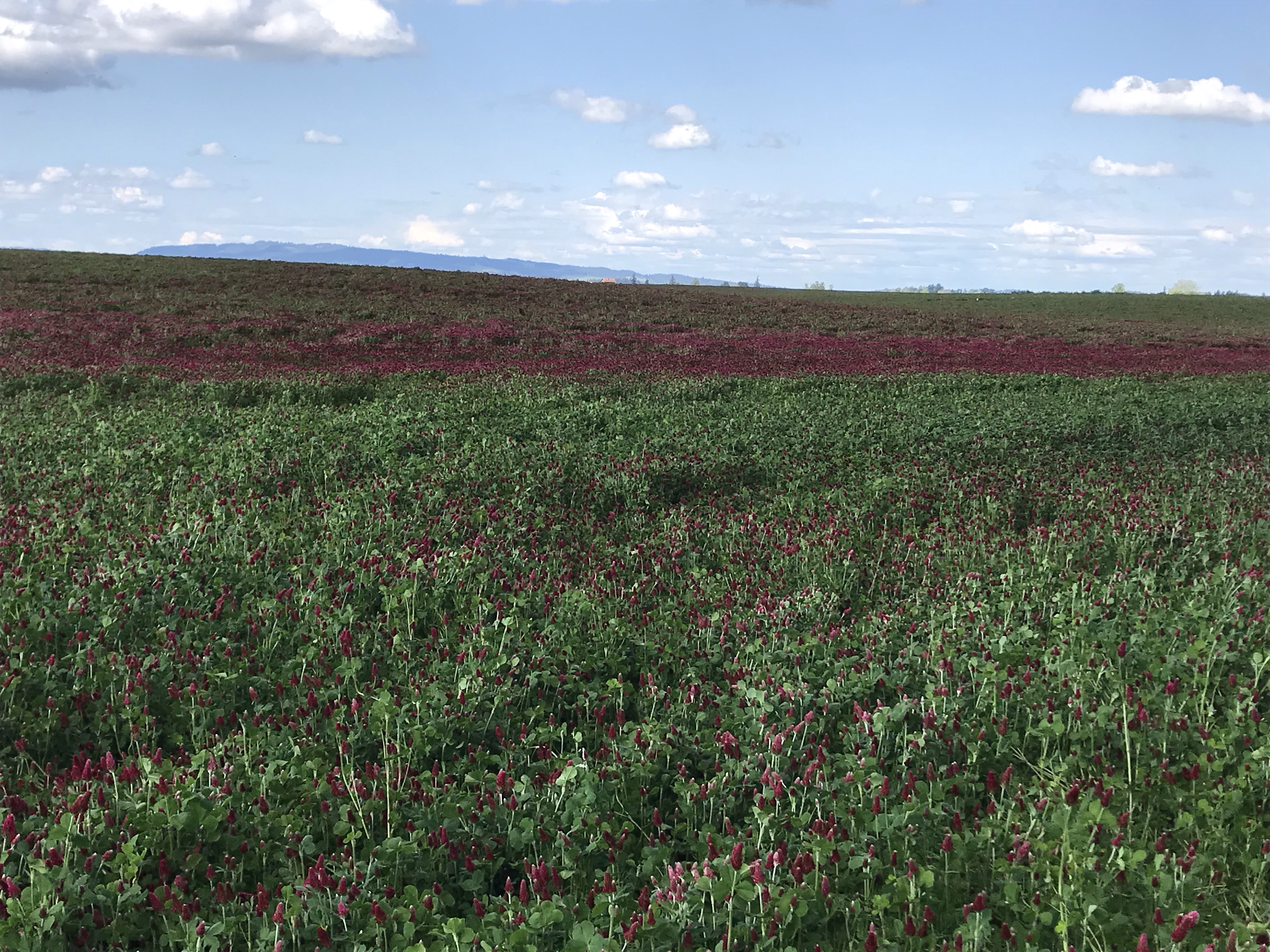
One of my favorite crops that we grow on our farm is crimson clover.  We grow this crop for seed and as a rotational crop between grass species.  One of the main reasons it’s my favorite is because of how beautiful it is.  As a side note, this crop is not usually grown because it makes us any money (hahaha)!  Maybe that’s not funny to people who aren’t farmers, but the point here is that we grow some crops because of the benefits they give us in the soil and in rotational weed control, not because of how cushioned they make our pocketbooks.

We will harvest this crop late June to early July. Until that point we get to watch it get more and more red as the bees do their work pollinating.  We bring about one hive of bees per acre to pollinate.  These bees along with native bees do all the work to get us a good seed crop.  Once the blooms are done, the bees are removed to other crops to feed them.  Then we wait while the crop matures, dries down and gets ready to be harvested.

The seed that we harvest will be cleaned to be free of any weeds or other seeds. And then sold and used for cover cropping, wildlife mixes and soil regeneration projects.  Until then while you drive around this time of year, look around and enjoy the beauty these fields bring to the Oregon landscape.