As I said last week in my blog, ready or not…harvest is here! We started crimson clover harvest this past week, and we should hopefully finish up in a few days. We had about 140 acres this year, and it will take us about 5 to 6 days to finish it all up. 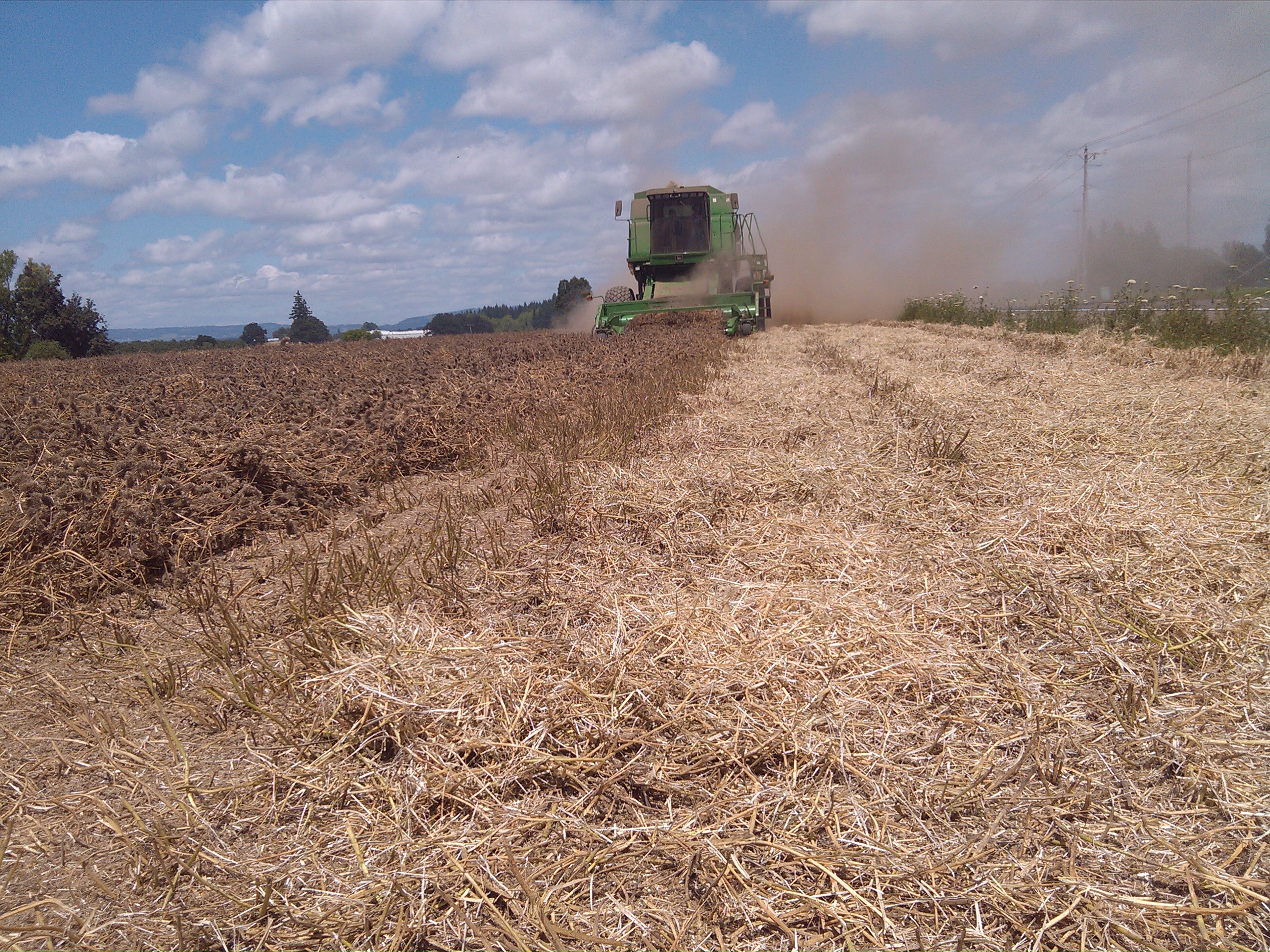 For all you farmers who think that is a really long time to take to combine…in our own defense we had a bunch of small fields in crimson this year. Which means you can’t be nearly as efficient as you would like. More corners in the field means more time turning and less time harvesting. And believe me, it all adds up! Still it is wild to think that this crop was planted last fall. We took 10 months worth of cultivation, scouting for disease & pests, fertilizing, spraying, walking fields again…all just to take only a few days to get the whole crop in and off the land.
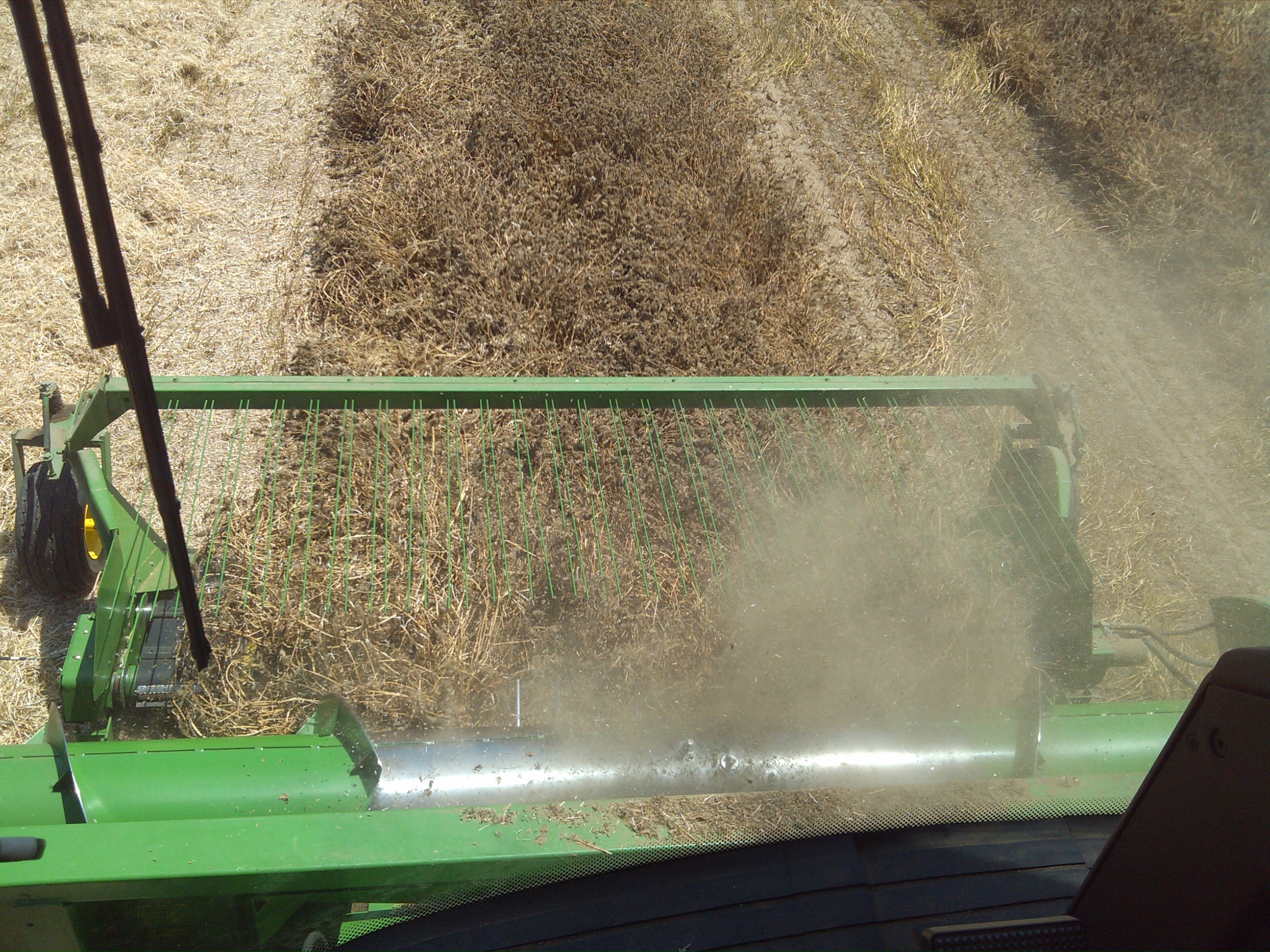 This is the view from the cab of the windrow going into the header of the combine. Crimson Clover is really really dusty and the dust is really really itchy!! Makes me glad every year that we have combines with cabs, unlike the “good ol’ days!” Although if you’re like me and out in the field instead of in the cab…you still get that good itchy feeling every time you work on a machine! You can say after a day of harvest there is no water wasted on me!
 This is the view looking from the inside of the combine out the back window into the grain tank. The seed is brought up through the header, the material is then rubbed together with the straw and the seed falls out of the bell shaped casing it has around it. Then the seed is augered up into the grain tank, where it will be them be dumped into a truck and taken to get cleaned and bagged.
 This is what the clover seed looks like, the golden colored seed is what we are after. The off type colors are usually under developed seeds. Also you can see that we didn’t quite get all the bell shaped casing out, those are the larger fury parts in my hand.
 So just a few more days and we’ll be all finished up with our second crop. First Peas, now crimson and next up perennial grass seed. Hope everyone has a great week!
Category: Harvest
Why grow Crimson Clover for Seed?
The first crop that we will harvest this year is crimson clover. I have shown you a few pictures through the year of how this crop is coming along. 

 And now finally the seeds are starting to mature and it looks like we may be swathing (cutting the crop into rows for combining) very soon! Again, I know what you all are thinking, “Way to go farm girl….aren’t you planning to get married in a few weeks?” Well yes, the wedding is still on, we may just have to fit harvest in there sometime too!!

 The seeds when they are ripe or mature, turn that golden almost mustard color. You can see that these seeds I checked this morning are still pretty green.
But the question comes back, “Why plant Crimson? You can’t eat it, you can’t plant it for a yard, it can’t be used for fiber or fuel…what is the big deal?” As an end product the simplest answer is that it is used many times as a cover crop. It helps not only keep the soil in it’s place, but it can also shade the soil, protect top soil, reduce moisture loss, and it also adds nitrogen back into the soil. But for farmers in this area, who just grow the seed and then sell it off all around the world for a cover crop, it also gives us many advantages.
There was an article in the Capital Press all about this crop and why it’s becoming so popular. You can read about it in this article that was published a few weeks ago…there may be a farmer you recognize in there! Crimson Clover Catches On
“Brenda Kirsch and other farmers in Oregon’s Willamette Valley often plant it after grass seed and wheat crops, helping to suppress weeds like annual bluegrass due to broader herbicide options. ‘The ability to clean up a field is just invaluable,’ Kirsch said.”
You can see in the article that this is a good rotational crop for our area, and a good cover crop for areas all around the United States, and we hope that this trend continues.
“Even with the rising prominence of cover crops, probably fewer than 1 percent of Midwestern growers use them, Wirth said. If that level someday reaches 20 percent, which is realistic, the market opportunity for seeds is great.” said Don Wirth, a farmer in Junction City Oregon.
I have said many times that we are lucky to live in an area where we have choices on what we can grow from year to year. I think that crimson is one that will stay in our soil for many years to come! And I’m glad that I will only have to deal with driving a swather in my wedding dress one time in my life!
Squash Harvest 2012
I realized after posting our Filbert Harvest story through pictures, I skipped a crop. We also had our squash harvested a few weeks ago. If you’ve been following along with my blog, many Wednesdays have been pictures of these crazy orange pumpkins growing all season. Well finally, they are ready for harvest!
The squash is a new crop for us that is a result of a company no longer contracting green beans. It’s another challenge in any business, keeping an infrastructure healthy enough to continually support farms and agriculture. I talked about this change awhile back in my blog about Adversity & Diversity. It’s actually harvested just for the seed, the seeds are roasted and then eaten. It’s always an interesting thing to add another crop to the farm. We are pretty diversified already, but we are relatively new to the row crop world. I’m still always amazed at these short seasons from planting to harvest. With perennial ryegrass, we plant in the fall, usually around this time of year, and then don’t harvest until July. This is the story that we’re used to, about a 10 month crop cycle. So then when you begin by throwing a seed in the ground and 60 days later you’re harvesting, it’s always amazing to me and great how fast time flies. So here are some pictures of our first squash seed harvest EVER at Kirsch Family Farms….Enjoy!!
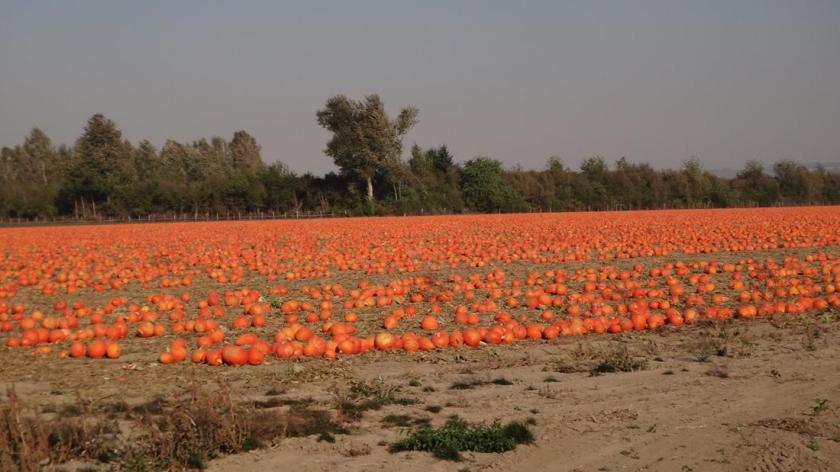
A sea of Orange out in the field.
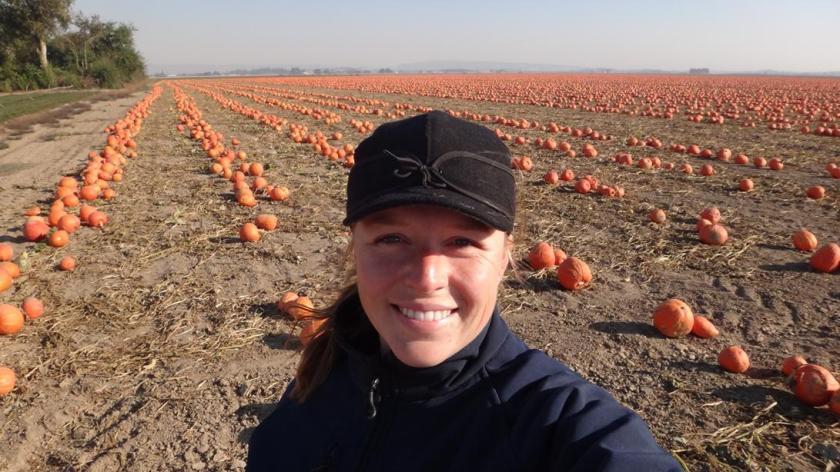
The squash are “windrowed” (put into rows), at the same time they are pulled from the vines.
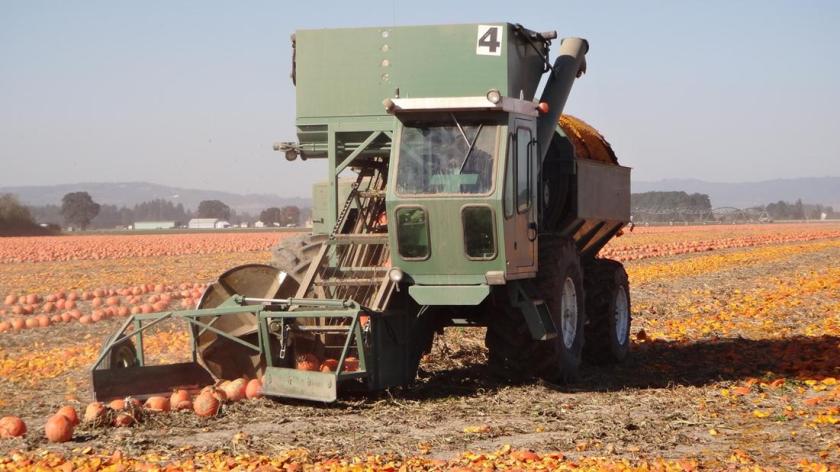
The harvesters use conveyers to pick up the rolly polly squash, smash them separate all the seed from all the other ooey gooey stuff that is inside of pumpkins!

After the seeds are separated, they are put into a tank at the top of the harvester, pretty much a close idea to how a regular combine would work. Then they are augured into a truck to be hauled off to the roaster.
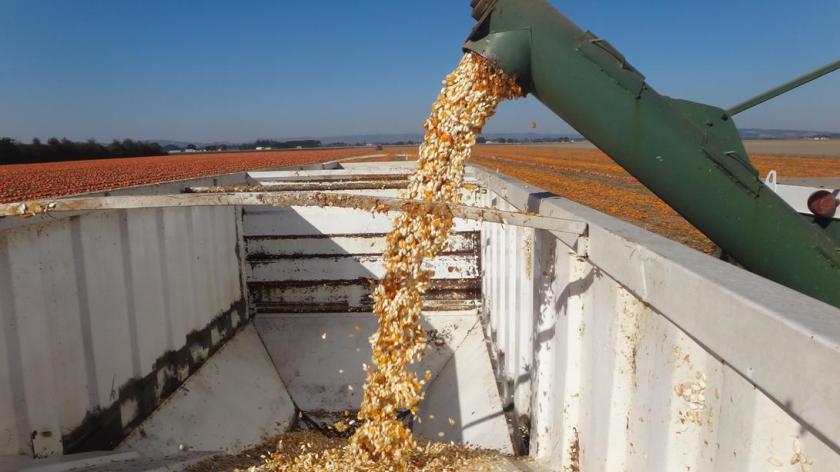
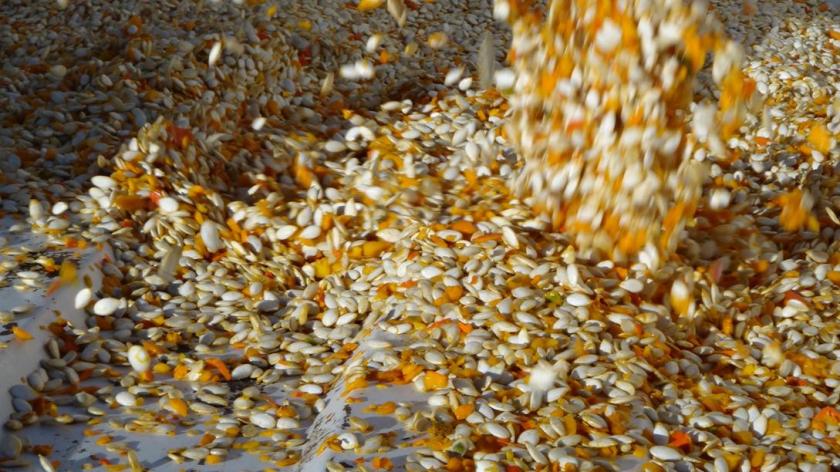
Then you’re left with a LOT of pumpkin, a lot of orange, and a lot of slop!
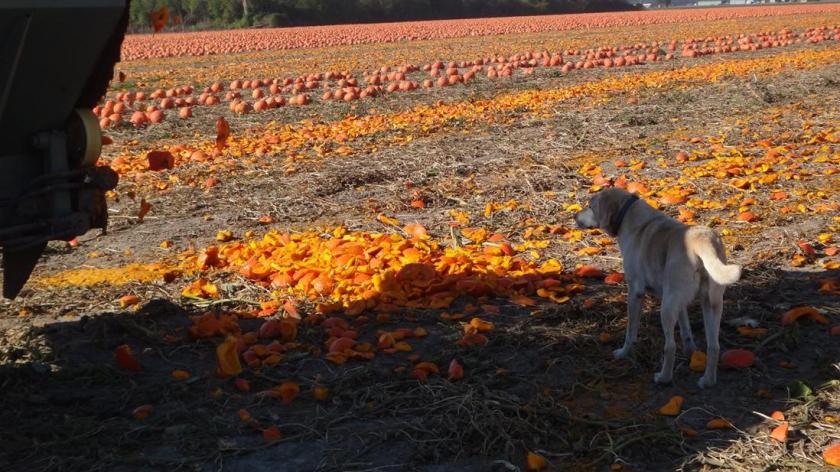
All in all, I think that we had a good crop of squash and even though it seemed like a few months ago we were going to be up a river without a paddle for some of our acres, I’m glad that this opportunity came about and we were able to learn something new and try something different with our ground.
 NuttyGrass