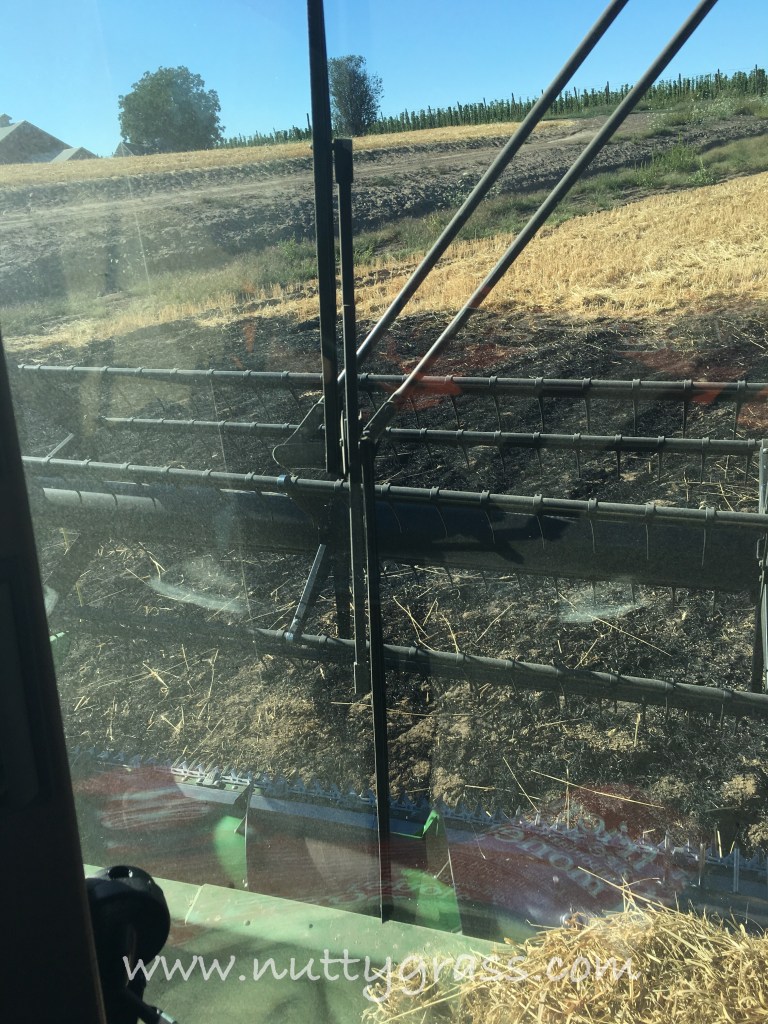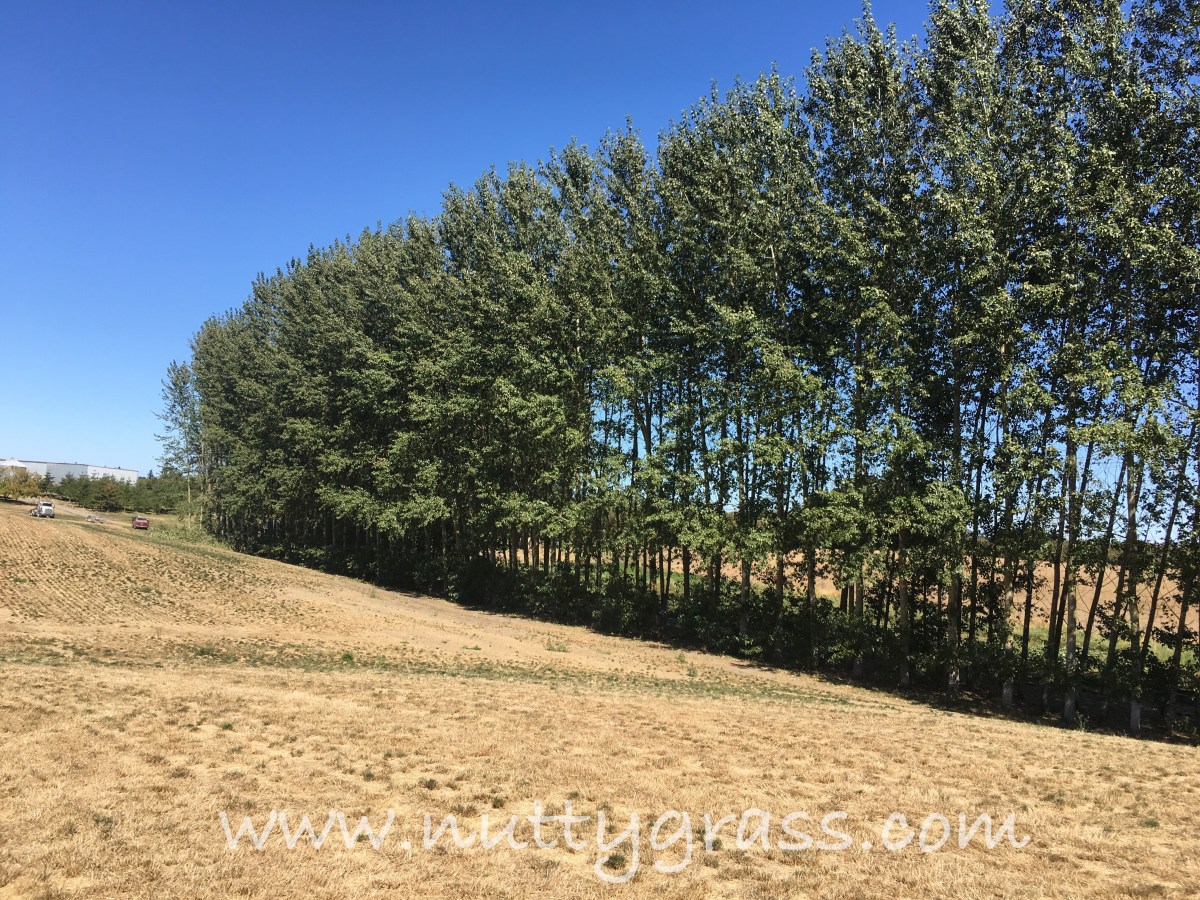
The 12th crop on our farm this year, is one we have never had before! Well more accurately we have been growing this particular crop for years, some of the trees are just about old enough that I hardly remember what the fields looked like without them. It’s only 8 acres of trees, but planted on a 10×10 grid, once the project is done we will have moved just under 3500 trees off the farm! Which, let me tell you, is no small process!! Thankfully we were lucky to get Pihl Logging in for the project, they make it look easy!
 After making the decision to cut down the trees, I’ll admit I couldn’t get visions of the movie “The Lorax” out of my head. If you haven’t seen it, it’s a Disney animated movie (story of which was originally written by Dr. Seuss) where the whole world basically gets logged and there was nothing left, it was a huge mistake, someone had to stop them…it makes loggers look awful to say the least. So I took a step back and really thought about what we were going to do and why, and I realized something very important. I am not living a fairy tale not do I operate our farm in a Disney movie. I farm and take care of our land in the real world. The real world that comes with real dirt, real crops (even trees) that need to be harvested, real pests, and real decisions that have to be made now to make our farm sustain into the future.

 Hoot even got to take a ride!
So why did we cut down these beautiful trees? We logged the trees because when they were planted around 15-20 years ago in different blocks, they were planted mostly as erosion control in some very wet, unfarmable ground. As they have grown, and wow do they grow, they have started to make a large portion of our good farm ground unfarmable as well. This is because, in part they shade the hillside that goes up against them, and they also shed their leaves every year smothering crops that we have planted there. For years we have fought the leaves and shade, which seems to only leave room for weeds to prosper and thereby hurting our crop that we are trying to grow. It was time to harvest this crop of poplars!

 So we finally made the decision that the trees were big enough to cut down and send to the pulp mill. These trees will go to make products like toilet paper, notebook paper, newspaper….you get the point here! It was also a timing decision based on where that particular field was in our crop rotation. We plan to no till plant spring wheat into the field this spring. This gives us plenty of time to get log trucks in, loaded on solid ground, and off to the mill with as least amount of damage to the soil as possible. Please don’t ask us what we are going to do with the thousands of stumps we have left sitting there, that is going to be a whole other blog post someday.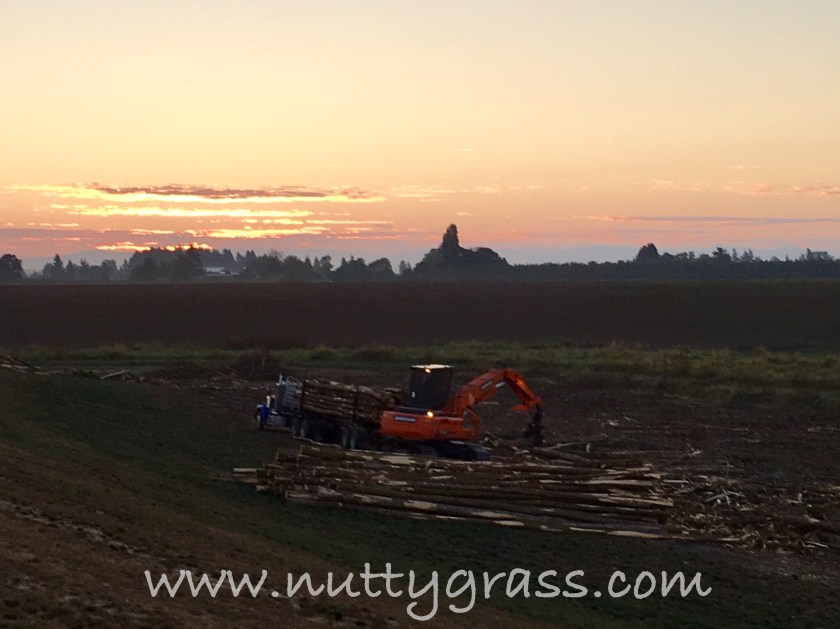
Here are a few videos…
So there is my real life, not fairly tale depiction of our 12th crop, poplar trees! Decisions of how to best take care of the land are hard thought with complicated issues such as timing and lot of pros and cons. I look forward to taking care of this wet ground, I look forward to farming our good soil better, and I look forward to the next crop of poplars…of which I’m guessing the 4th generation will get to take care of.