
A month ago I took a quick trip (36 hrs) down to Tuscon, Arizona to participate in a panel to discuss farm wife life and all that comes with it. I was on a panel with Holly Spangler (Editor, Prairie Farmer & Executive Editor, Farm Progress), Sherry Saylor (Farm Bureau legend, school counselor and quite possibly the funniest person I’ve ever met), Laura Daniels (Hitch Pin Consulting & DairyGirl Network), and our moderator Kirbe Schnoor (FarmHer & RanchHer TV Host).
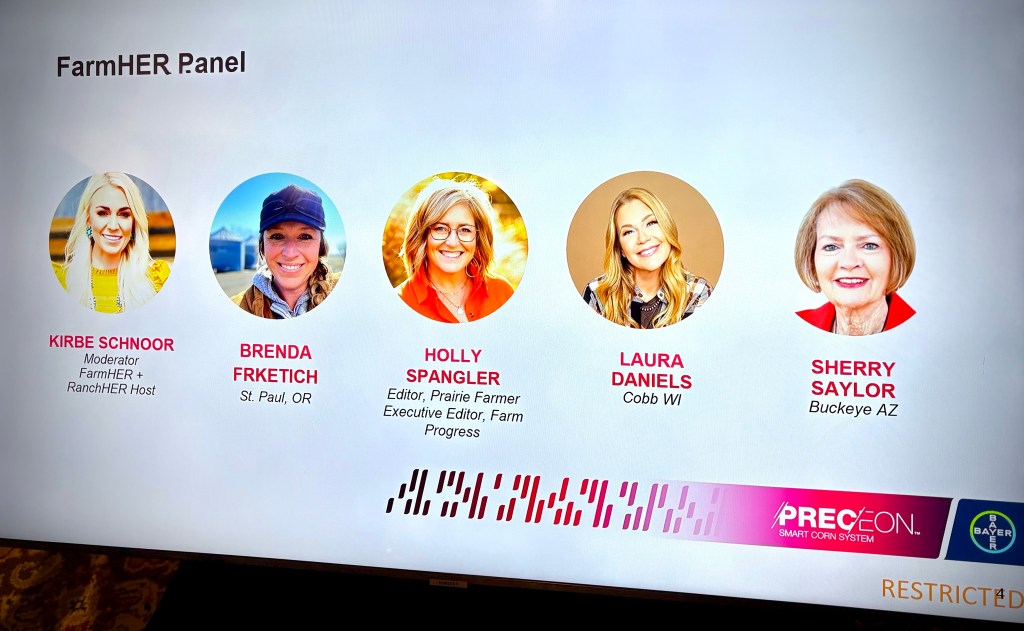
The panel went great, we covered a lot of heavy topics like work life balance, succession planning, farm life stress and how to manage it, and all that comes along with “just being a farm wife.” I say the “just a farm wife” jokingly but while I was on the way to the airport and chatting with my Uber driver, he asked what I was speaking about and I told him, “I was speaking on a panel to farm wives about challenges, succession, that kind of stuff.” and he responded, “Farm wives….aren’t all wives of farmers just farmers themselves?! I have never known anyone to live on a farm and not have a role beyond ‘just a wife!'”
He didn’t say it mean but he was for sure calling me out just a little, which is funny considering my adult life has mostly been talking about how we all have important roles, and how women have been “the farmer” for a long time but just never checked the box in the USDA survey to say they were. But anyhow it sparked a great conversation about women in farming, how things have changed from the days gone by and how women have always and still do play a very important role.
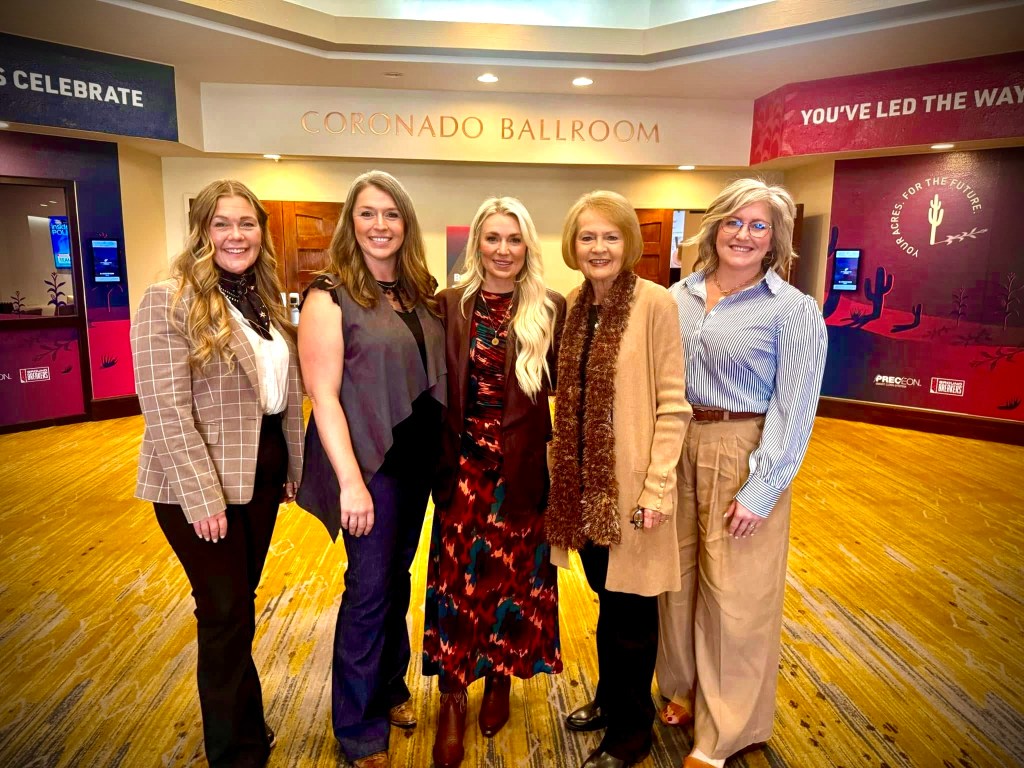
The panel was only an hour and I still sit here today weeks later thinking of things I should have added or could have said. There just wasn’t the time to cover all the conversations and discussion that a panel of farm wives could bring about. But I did walk away with some key concepts that really resonated with me.
One was from Laura Daniels of Hitch Pin Consulting. She brought up a great point that maybe it’s unfruitful and even overwhelming to strive for a true work life balance that is unattainable and usually is attached with guilt. She re-framed the term, “Strive to be present in what you’re doing. Wherever your feet might be, be truly there.” I love this point and as someone who is guilt ridden as the next mom it gave me a new way to look at how I’m spending my time.
While the discussion was moving along I thought in my head that this panel alone represents so many organizations, so much time out of the home. And then the conversation shifted to the fact that all of us with kids, different roles on the farm, some with jobs off the farm etc. Kirbe Schnoor (host of the show Farmher and moderator of our panel) brought up another piece of the puzzle, adding that while these ladies are hitting a season of life that allows for involvement off the farm or farm adjacent, it’s also ok to just be home with the kids and taking care of a household. It’s ok to be in the season of life to say no. Which hit very much home for me and allowed me to expand on the fact that 6 years ago I stepped back from everything, I paused pieces of my life that took me away from my kids, for five years I said no to it all. And then this past year I have slowly started volunteering again in a few different capacities.
From that point on in the conversations seasons were a big theme. Of the four of us sitting there we all had kids at different ages. We all entered the agricultural world at different times in our lives, and we all have a different future ahead of us. But looking at your “season of life” was something that we all worked hard to be honest with ourselves about, and I think that helps us all be more successful for where we are today. Life isn’t easy, but it’s easier when you allow yourself to be honest about what your capabilities are in that time period.
Along with seasons was another great point that no matter what point you’re at in your life, you always need a tribe of friends to help you through. Find people in your life who understand your mom life, understand your working life and fall on them when you need it. That community has saved me time and time again and I can’t say it enough that we all need help sometimes.
The panel was truly a joy to participate in. There were a lot of laughs and emotions, but I hope that other women walked away knowing that they aren’t alone in this life of “just being a farm wife” and there are so many of us out there that understand that it’s just not that simple ever. I’m thankful to Bayer for recognizing the need for networking and having time to connect with other women. I’m also very excited for the number of women that I met that I’m sure I’ll run into down the road at other ag and farming events, always great to have friends all over the country! And lastly I learned a very good lesson, if you end up getting the chance to go to sunny Arizona in January, stay for more than 36 hours!


 NuttyGrass