The first crop that we will harvest this year is crimson clover. I have shown you a few pictures through the year of how this crop is coming along. 

 And now finally the seeds are starting to mature and it looks like we may be swathing (cutting the crop into rows for combining) very soon! Again, I know what you all are thinking, “Way to go farm girl….aren’t you planning to get married in a few weeks?” Well yes, the wedding is still on, we may just have to fit harvest in there sometime too!!

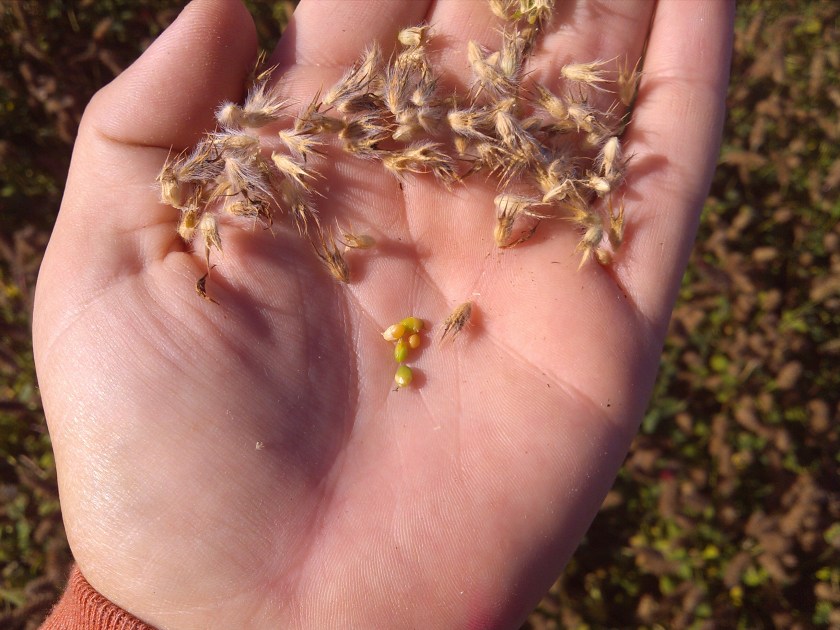 The seeds when they are ripe or mature, turn that golden almost mustard color. You can see that these seeds I checked this morning are still pretty green.
But the question comes back, “Why plant Crimson? You can’t eat it, you can’t plant it for a yard, it can’t be used for fiber or fuel…what is the big deal?” As an end product the simplest answer is that it is used many times as a cover crop. It helps not only keep the soil in it’s place, but it can also shade the soil, protect top soil, reduce moisture loss, and it also adds nitrogen back into the soil. But for farmers in this area, who just grow the seed and then sell it off all around the world for a cover crop, it also gives us many advantages.
There was an article in the Capital Press all about this crop and why it’s becoming so popular. You can read about it in this article that was published a few weeks ago…there may be a farmer you recognize in there! Crimson Clover Catches On
“Brenda Kirsch and other farmers in Oregon’s Willamette Valley often plant it after grass seed and wheat crops, helping to suppress weeds like annual bluegrass due to broader herbicide options. ‘The ability to clean up a field is just invaluable,’ Kirsch said.”
You can see in the article that this is a good rotational crop for our area, and a good cover crop for areas all around the United States, and we hope that this trend continues.
“Even with the rising prominence of cover crops, probably fewer than 1 percent of Midwestern growers use them, Wirth said. If that level someday reaches 20 percent, which is realistic, the market opportunity for seeds is great.” said Don Wirth, a farmer in Junction City Oregon.
I have said many times that we are lucky to live in an area where we have choices on what we can grow from year to year. I think that crimson is one that will stay in our soil for many years to come! And I’m glad that I will only have to deal with driving a swather in my wedding dress one time in my life!
Like what you read? Share it here...
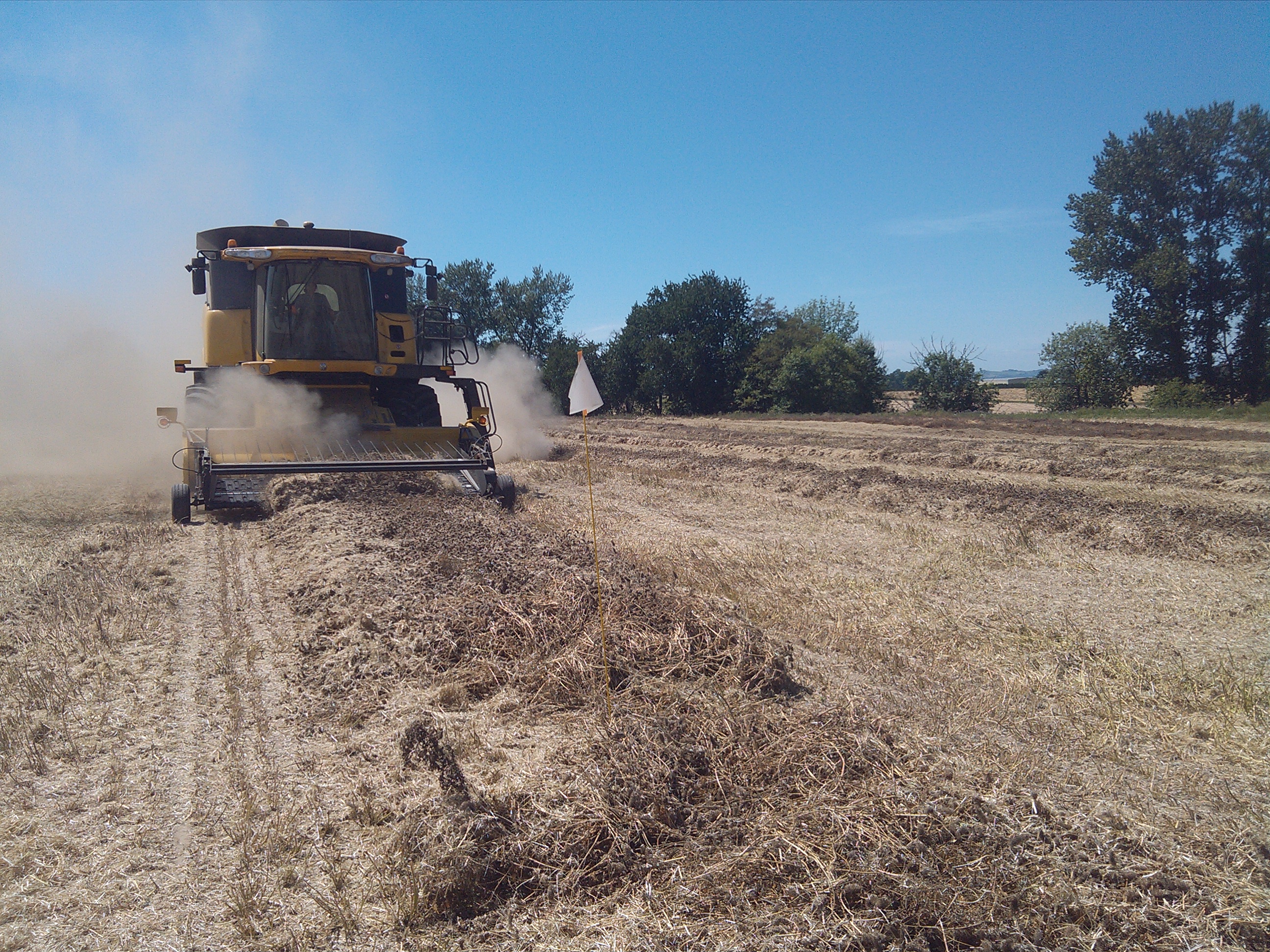
 That is what all the golf tee flags are for.
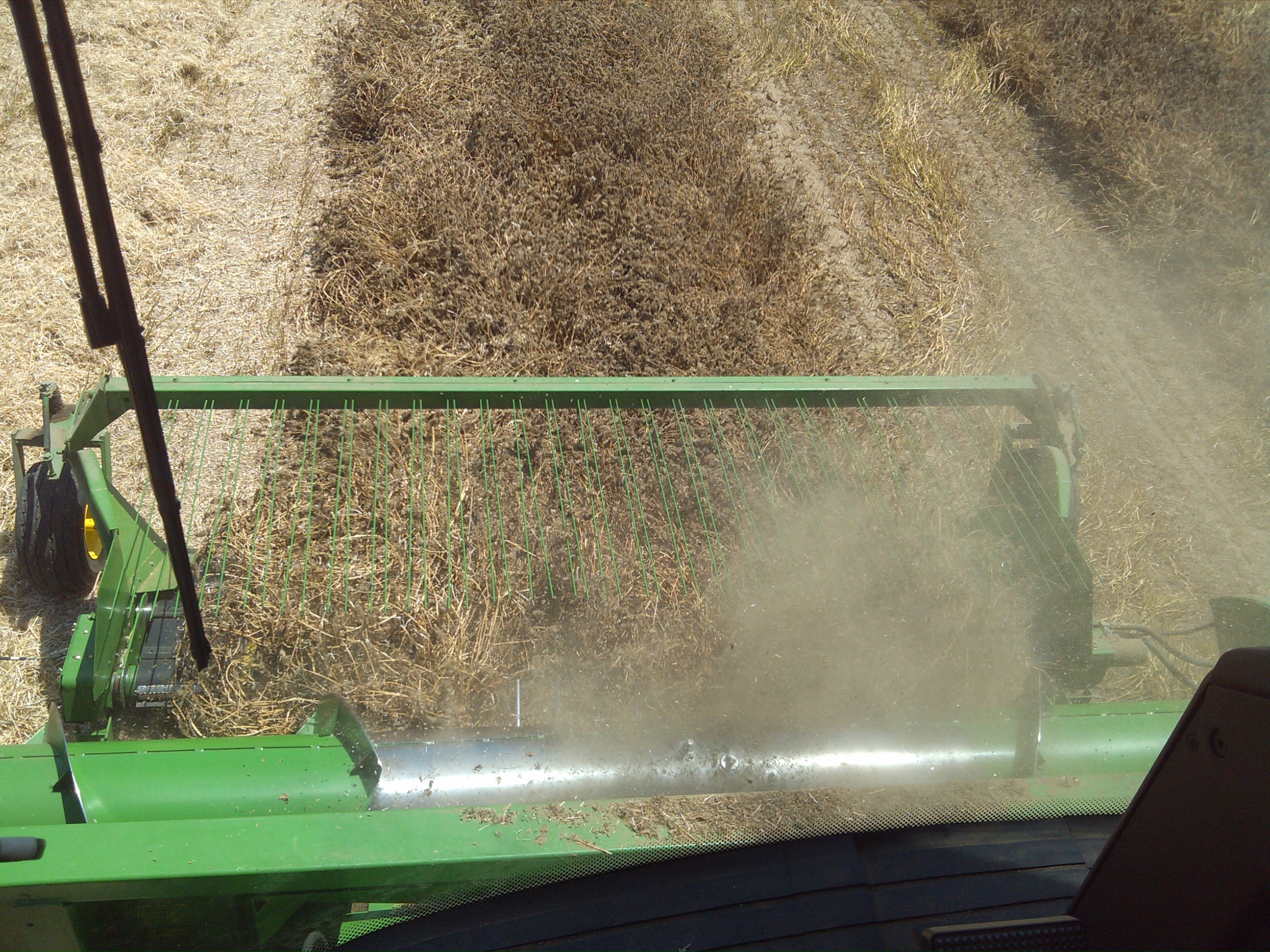
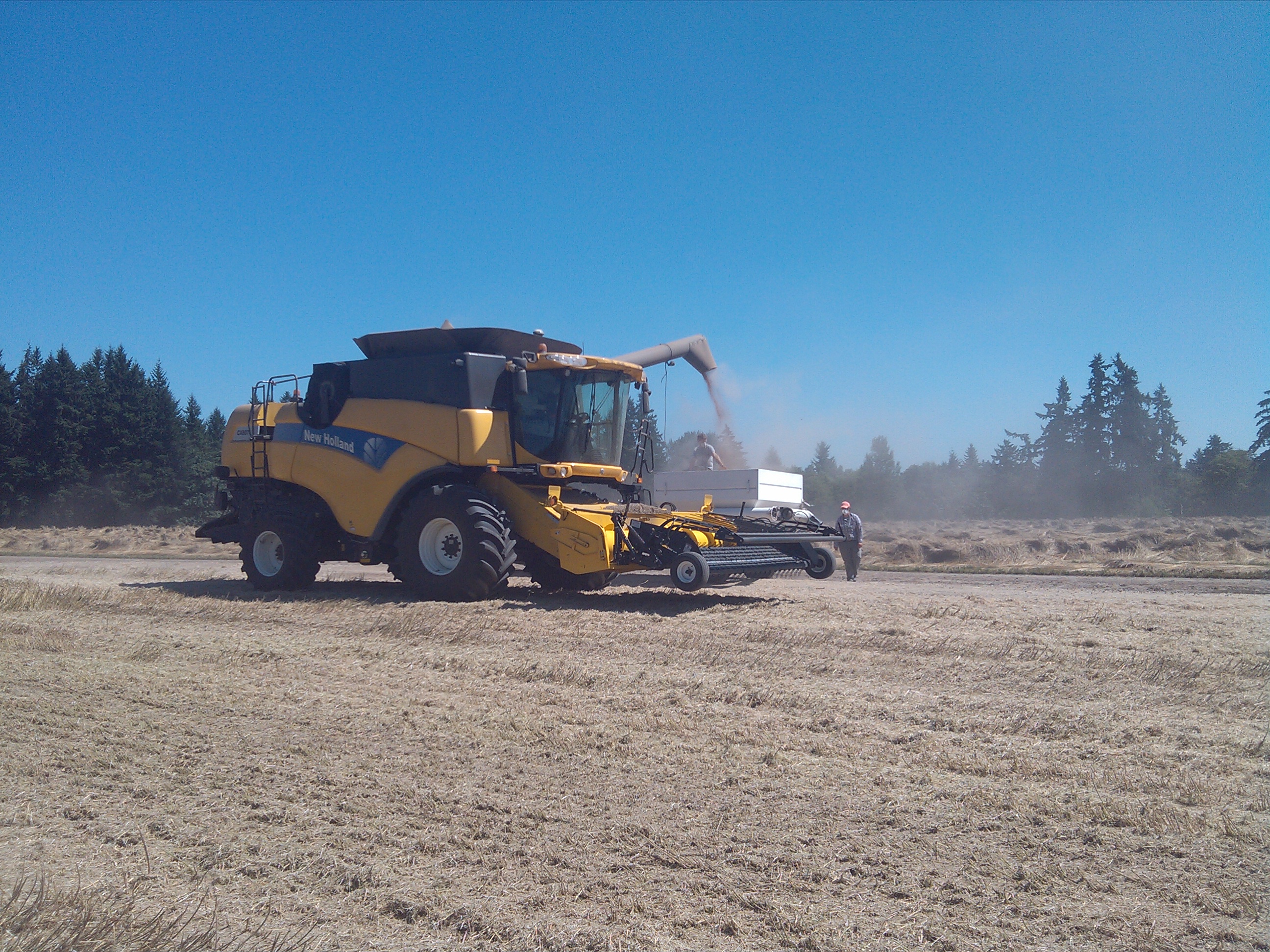 We dumped each small plot into a weigh wagon, where they took samples and notes on what the seed looked like. Then we celebrated…because we were finally done with Crimson Clover harvest!
 This too is a dusty job!
 The best part though…is this time I’m in the cab!!!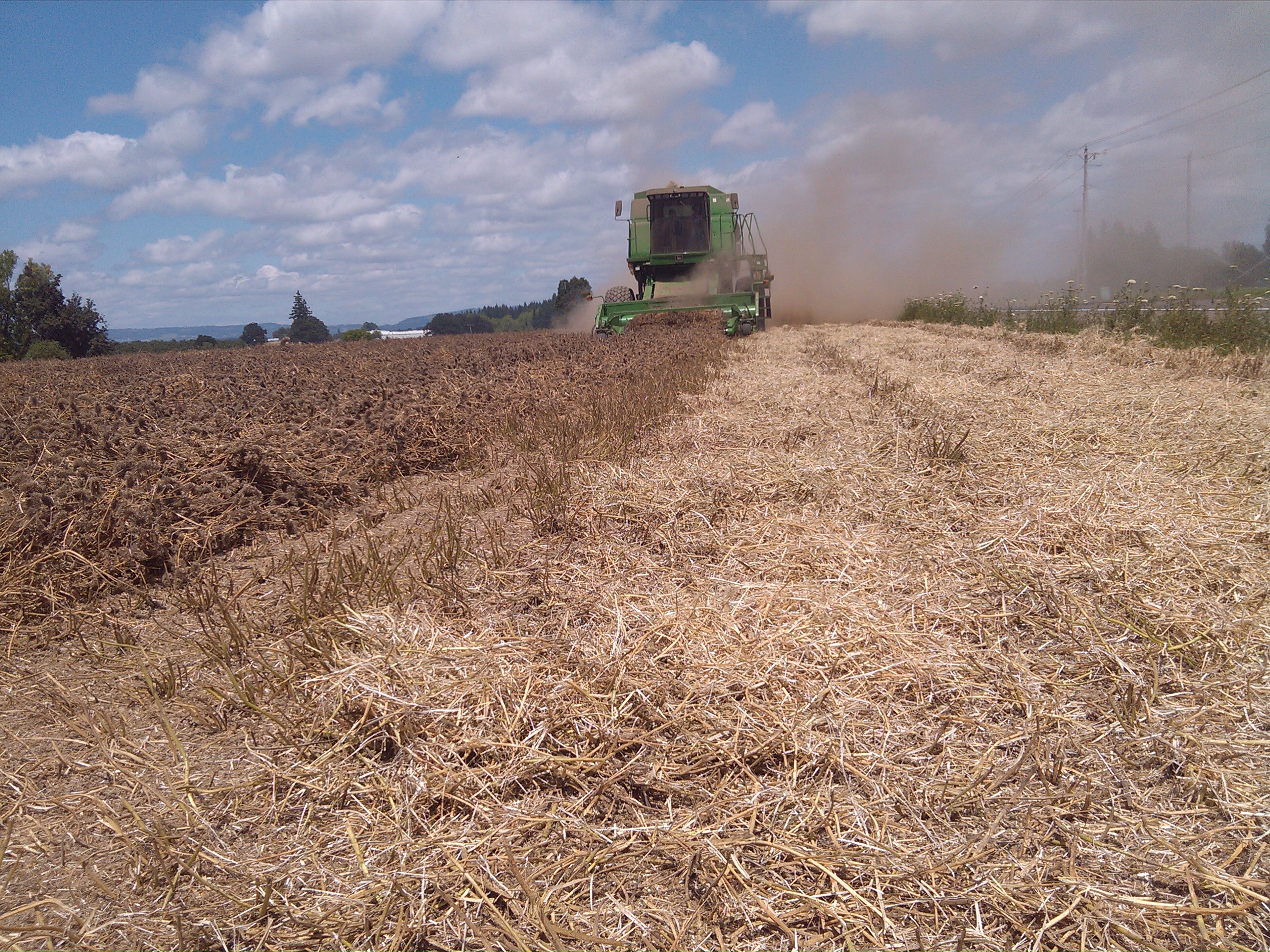


 NuttyGrass